





Houzz Tour: A Flat’s Colourful Redesign Captures Family Memories
The design of this apartment recreates parts of a treasured family home while bringing it into the 21st century

Яна Иванченко
26 October 2021
The owner of this apartment inherited it from relatives who were mining engineers and worked as professors at the Ural State Mining University in Ekaterinburg, Russia. Although he’d lived most of his adult life elsewhere, he wanted to keep this memento of the lives and lifestyles of generations past. A redesign of the apartment by a designer on Houzz has preserved the past 60 years of the family’s history.
Apartment at a Glance
Who lives here? A mature couple, both translators
Location Ekaterinburg, Russia
Size One bedroom and one bathroom; 90 sq m
Designer Svetlana Pakhomova
Photos by Michail Pomortsev
Sixty years ago, the current owner’s great-grandmother exchanged her historic house, which had stood across from it, for this apartment. The house was demolished when the neighbourhood was rebuilt.
The apartment was furnished with items of sentimental value, historical artefacts from various eras, and books. It also contained documents about the owner’s great-grandfather, who had been persecuted under Stalin. It was only during the renovation that the owner found out about the 10 years his great-grandfather had spent in labour camps.
Who lives here? A mature couple, both translators
Location Ekaterinburg, Russia
Size One bedroom and one bathroom; 90 sq m
Designer Svetlana Pakhomova
Photos by Michail Pomortsev
Sixty years ago, the current owner’s great-grandmother exchanged her historic house, which had stood across from it, for this apartment. The house was demolished when the neighbourhood was rebuilt.
The apartment was furnished with items of sentimental value, historical artefacts from various eras, and books. It also contained documents about the owner’s great-grandfather, who had been persecuted under Stalin. It was only during the renovation that the owner found out about the 10 years his great-grandfather had spent in labour camps.
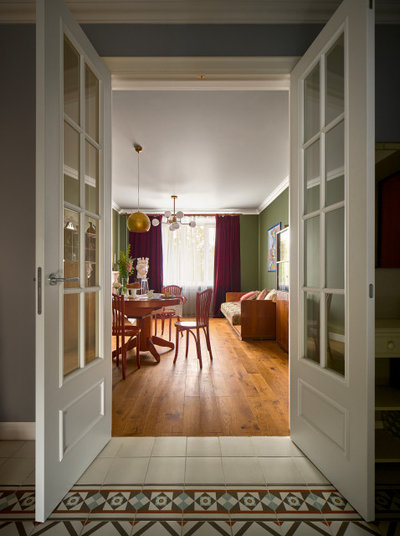
The owners found designer Svetlana Pakhomova on Houzz. She tried to preserve as much of the familiar layout and colour scheme of the owner’s childhood home as possible. Some of the historic décor also stayed in place.
The renovation took three months and transformed the apartment. Pictured here is a view of the dining room from the hallway after the renovation.
The renovation took three months and transformed the apartment. Pictured here is a view of the dining room from the hallway after the renovation.
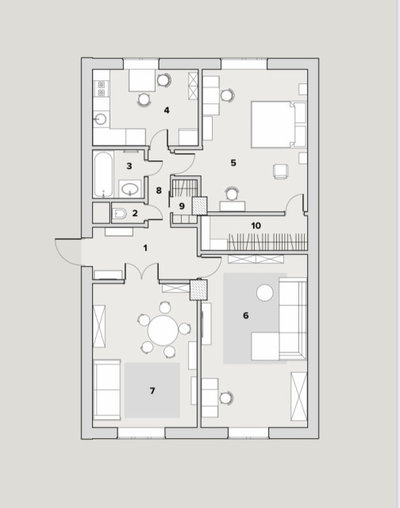
The layout was left mostly untouched. The entry is on the left (1). Off the the entry, a hallway (8) leads to a cloakroom (2), a storage room (9), the bathroom (3) and the kitchen (4). Some of the rooms have swapped functions: The former nursery is now the dining room (7), the bedroom became the living room (6), and the original dining room has been turned into a bedroom (5) with a walk-in wardrobe (10).
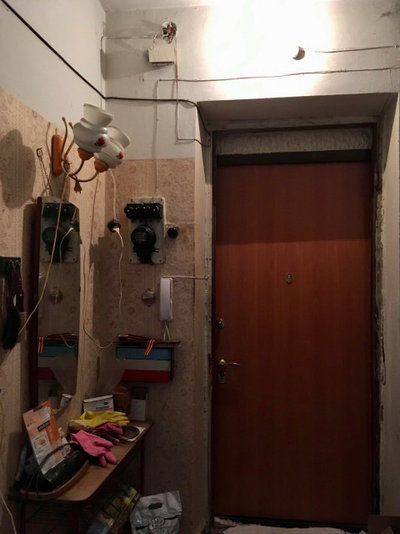
The vintage electric meter with its plugs was perhaps the only interesting object in the entry when the renovation began. The décor was outdated and the open wiring didn’t exactly improve the appearance of the walls.
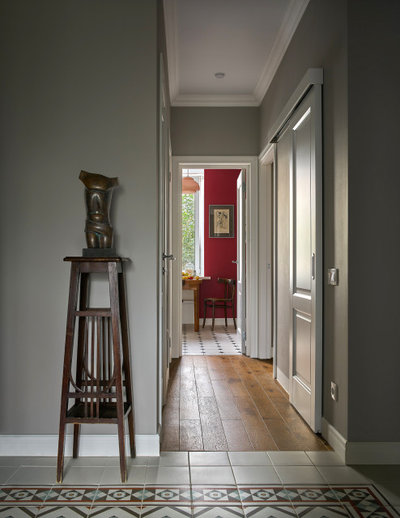
The designer exchanged linoleum flooring in the entry for pale grey porcelain tiles in a carpet pattern and laid wood flooring in the hallway. The walls are painted in a cool grey tone from floor to ceiling.
Down the hall on the right in front of the entrance to the kitchen is a storage room with a sliding door. Two hinged doors across from it lead to the cloakroom and bathroom.
Down the hall on the right in front of the entrance to the kitchen is a storage room with a sliding door. Two hinged doors across from it lead to the cloakroom and bathroom.
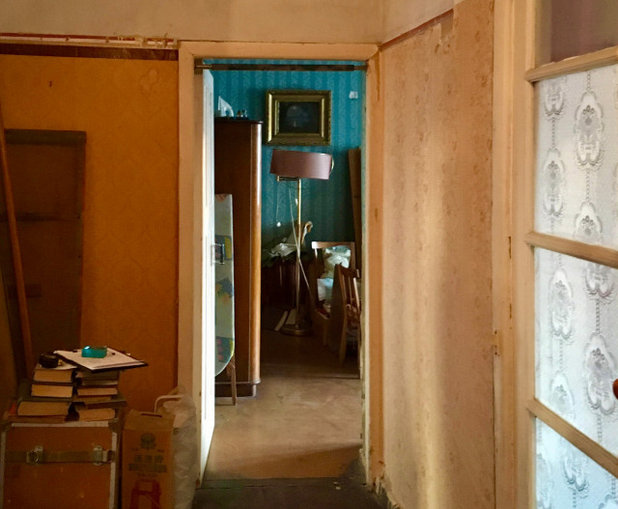
Originally, this room was a bedroom with deep blue striped walls. Across from the door was a bookcase with glass doors from the Stalin era, and a 1960s floor lamp from the German Democratic Republic that had a lamp shade on a movable arm attached to a long stand. Works of art and antiques had adorned the space. However, like the rest of the apartment, the room was overloaded with things.
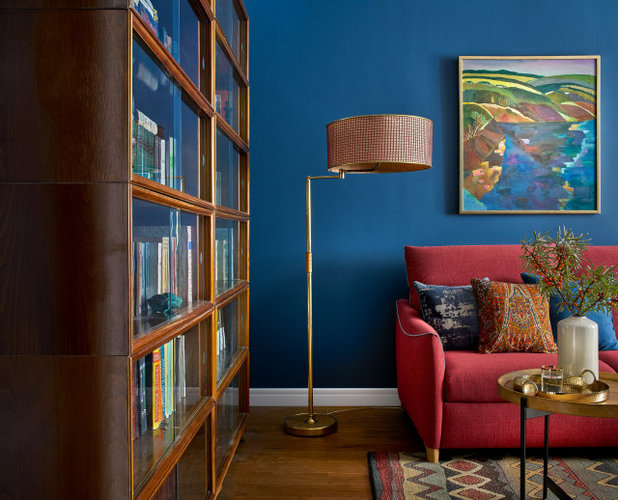
The walls in the renovated room are still the colour the owner remembers from his childhood. However, Svetlana went for a more saturated blue with no stripes or pattern. The antique bookshelf with its curved sides and the vintage floor lamp stayed in their previous spots.
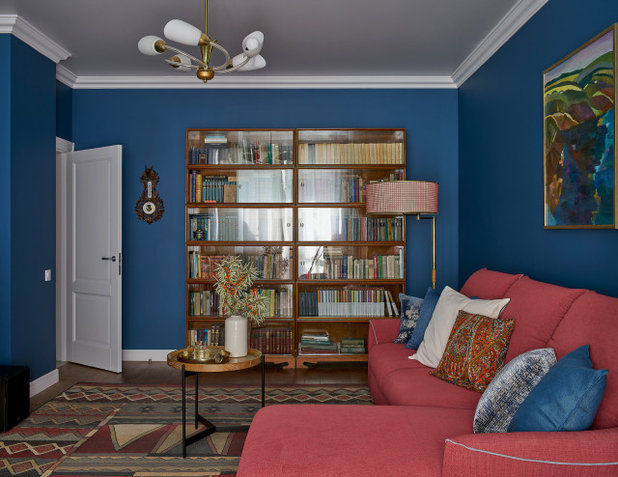
As this space now serves as the living room, Svetlana selected a bright coral pink sofa to liven up the dignified blue of the walls. She hung a large painting (Kama River by Elena Rufova). The designer underscored the room’s 1960s feel with a five-arm ceiling light.
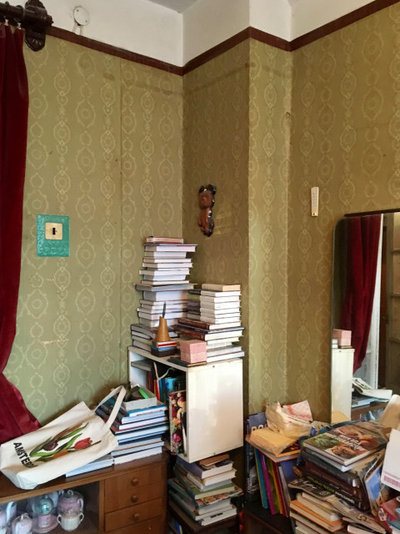
The walls of the nursery – now the dining room – were an olive-yellow colour with a burgundy border. A thick curtain over the doorway – in Russia, a feature associated with professors’ apartments – gave a heavy feel to the space.
Books had been piled up high in the corner of the room, with the 1980 Moscow Olympics bear mascot hanging overhead.
Books had been piled up high in the corner of the room, with the 1980 Moscow Olympics bear mascot hanging overhead.
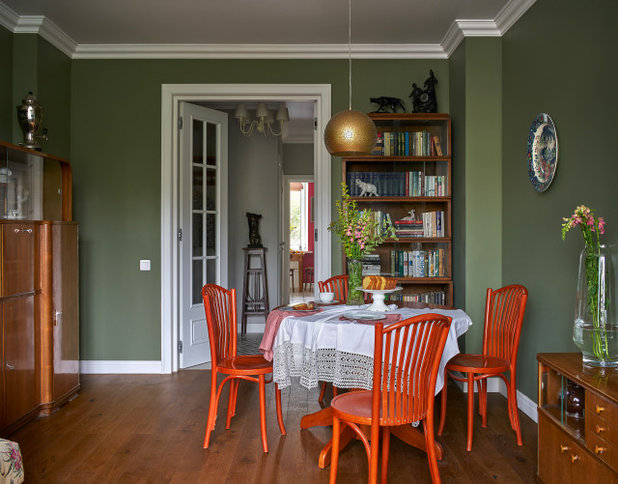
The walls of what has become the dining room were straightened out with plasterboard. Svetlana replaced the olive-yellow paint with a sage shade. As in the other rooms, she put in a short cornice with a high profile.
She got rid of the curtain over the door, but echoed its burgundy colour in the window dressings. Svetlana positioned a bookshelf, which came with the apartment, to the right of the door. Alongside books, it displays Kasli cast-iron figurines from the family collection.
She got rid of the curtain over the door, but echoed its burgundy colour in the window dressings. Svetlana positioned a bookshelf, which came with the apartment, to the right of the door. Alongside books, it displays Kasli cast-iron figurines from the family collection.
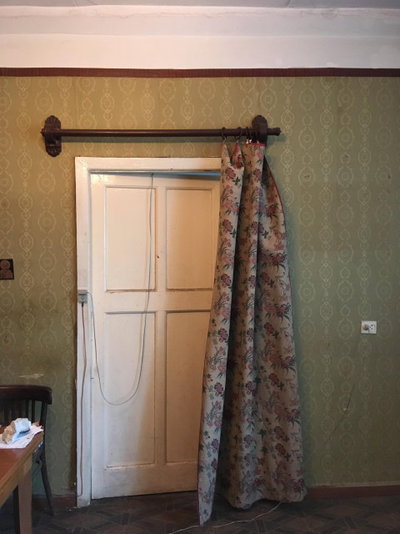
There had been another door closer to the window in the room. It led to what was then the blue bedroom and is now the living room. Svetlana suggested filling it in.
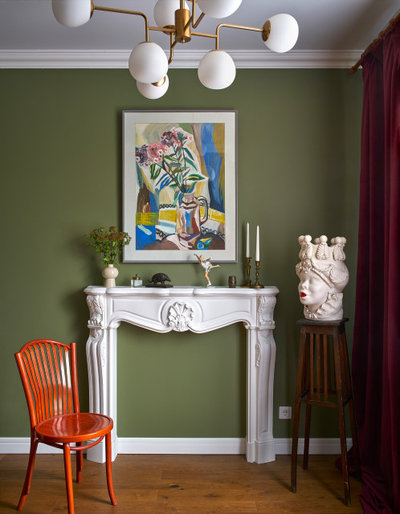
Now, a decorative mantelpiece with a painting over it has replaced the closed-up doorway. This classic technique has livened up the room and broken up the visual dominance of the lacquered wood furniture. A German porcelain ballerina figurine – yet another heirloom – stands on the mantelpiece.
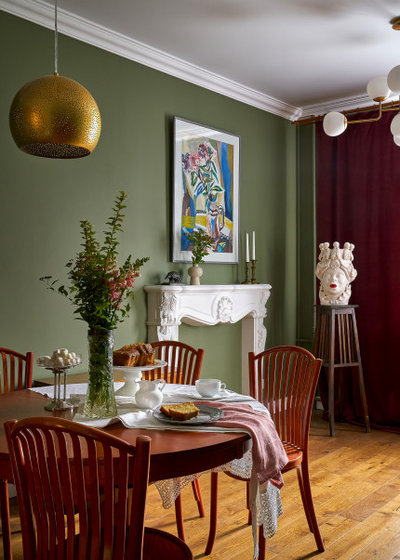
A white contemporary German pendant light illuminates the relaxation area between the mantelpiece and the vintage sofa (seen in the next photo). There’s an additional pendant hung low over the dining table.
The circular table and its bright chairs were a gift from the wife’s parents; the owners brought it with them from their former apartment. The pieces fit the olive-coloured dining room perfectly, brightening up the academic surroundings.
The circular table and its bright chairs were a gift from the wife’s parents; the owners brought it with them from their former apartment. The pieces fit the olive-coloured dining room perfectly, brightening up the academic surroundings.
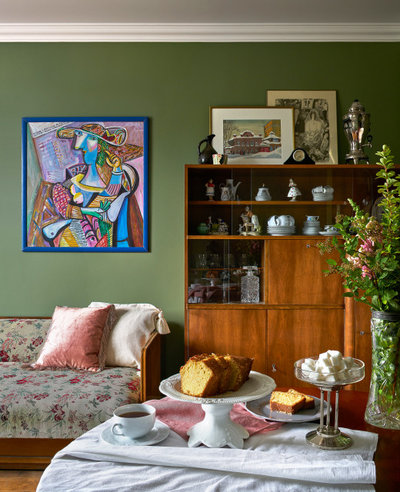
On the opposite wall there’s a vintage sofa and a shelving unit.
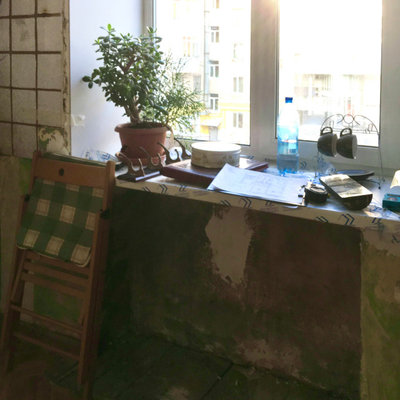
The former kitchen featured linoleum flooring, white cabinets and neutral walls. There weren’t enough bright accents for the new owners, especially in comparison to the saturated colours in the other rooms.
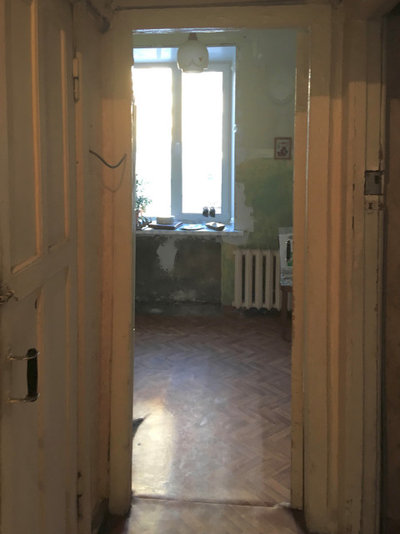
As in the other spaces, everything in here was rundown and sooty.
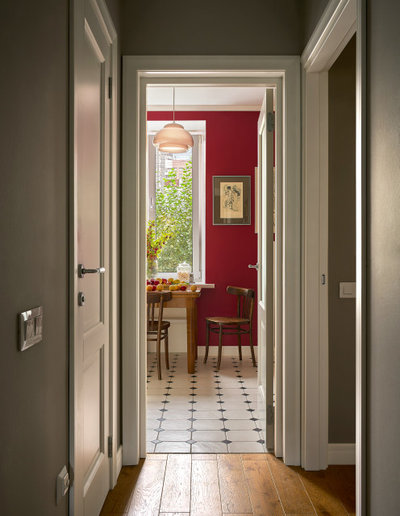
Svetlana kept the original kitchen layout. The compact work area is still to the left of the window, where the gas pipe is located. The biggest change is the Radicchio paint by Farrow & Ball on the wall. The flooring is classic white tiles with black square inserts.
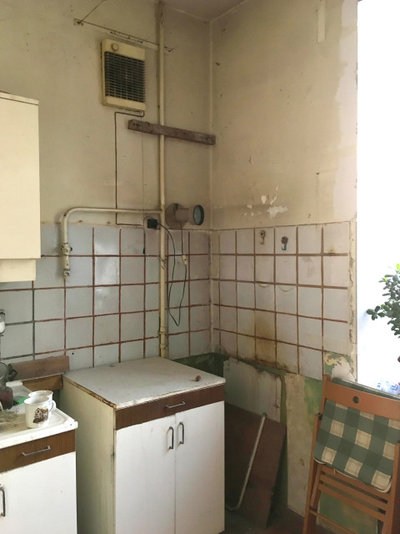
The original splashback was made up of light blue square tiles. The rest of the walls featured marble-effect wallpaper to the same height as the splashback. The top of the walls had been finished in white plaster, which had become discoloured over the years.
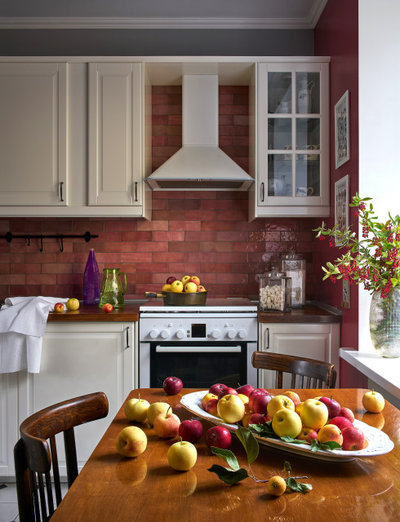
The gas pipes are now hidden, and glossy metro tiles in various shades of burgundy now cover the wall. Svetlana had the strip of wall above the cabinets painted the same calm grey as the hallway so it wouldn’t be too overwhelming.
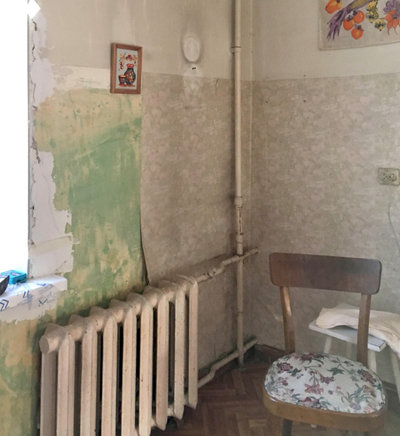
Under the old windowsill there was a niche in the wall for storing produce. The cast-iron radiator was offset and took up nearly the entire wall to the right of the window.
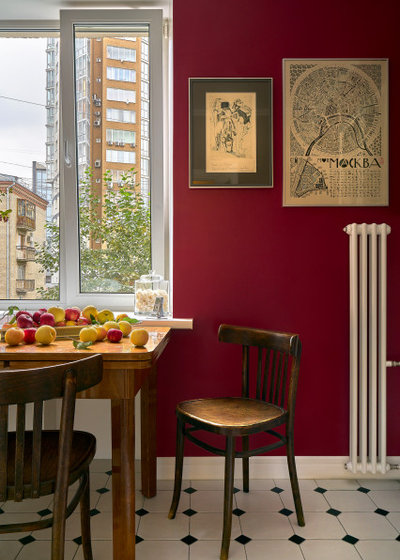
Now the long radiator has been replaced with a tall, narrow model, which freed up wall space and made more room for sitting around the table. Svetlana fitted the niche under the windowsill with shelves for storing glassware.
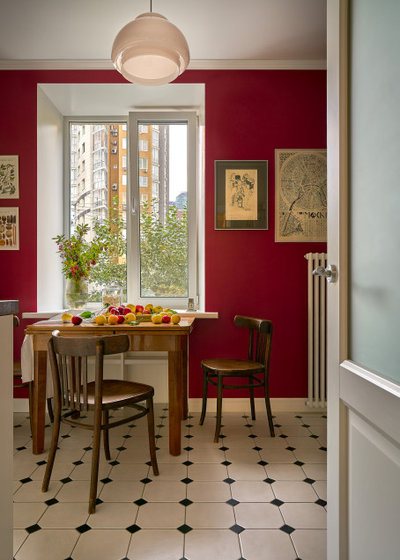
To the right of the window is an etching by renowned Russian artist Ernst Neizvestny. Neizvestny had given it to another artist, Misha Brusilovsky, who then gave it to the owners of the apartment. Its front bears the inscription “To Misha, from Ernst. To Brusilovsky from Neizvestny with love, 1968.”
Next to it hangs a poster by designers Uri Gordon and Heather Hermit (Irina Goryacheva) entitled My Moscow.
Next to it hangs a poster by designers Uri Gordon and Heather Hermit (Irina Goryacheva) entitled My Moscow.
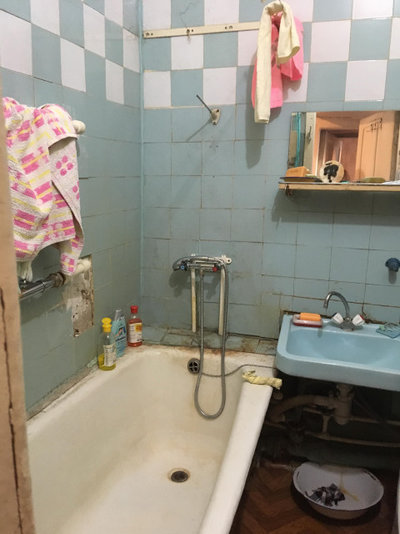
The old bathroom had a narrow walkway to the basin, which was installed opposite the door. The water pipes were in full view.
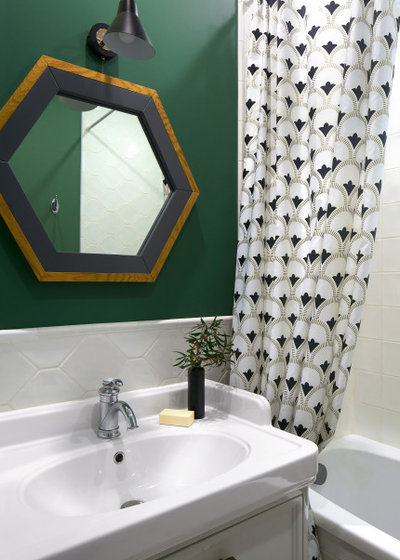
Svetlana swapped the positions of the basin and the bath. The pale blue square tiles were replaced with a neutral white version covering the front of the bath and the surrounding walls. The rest of the walls were painted in a saturated green tone inspired by a card table.
Svetlana added an off-the-shelf vanity unit with drawers, topped with a white tile splashback. The hexagonal tiles echo the shape of the mirror overhead.
Svetlana added an off-the-shelf vanity unit with drawers, topped with a white tile splashback. The hexagonal tiles echo the shape of the mirror overhead.
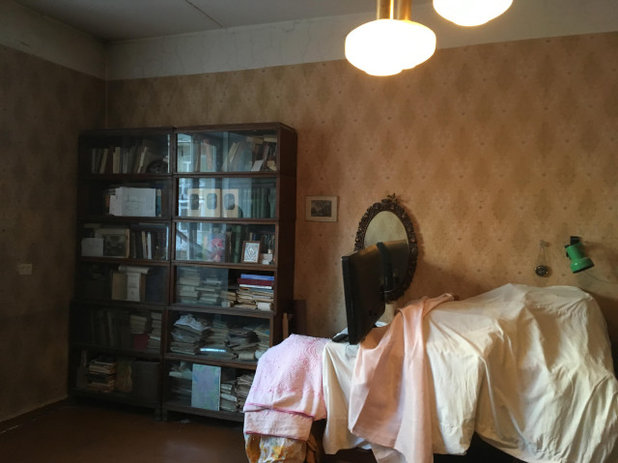
Before, this room, with its beige patterned wallpaper, brown furniture and a few framed engravings, was used as a living/dining room.
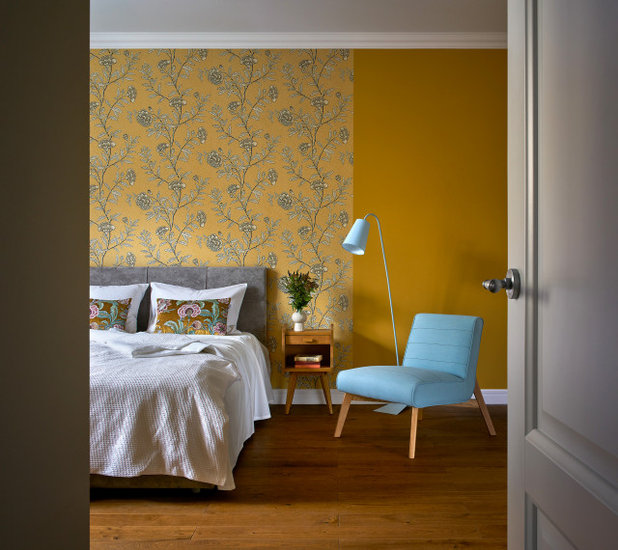
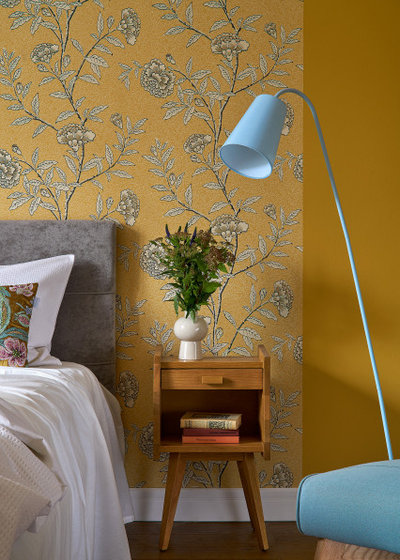
Svetlana converted the room into a bedroom, dividing up the space to add a walk-in wardrobe. She painted the walls a golden curry colour and created an accent area behind the bed with a flower-print wallpaper.
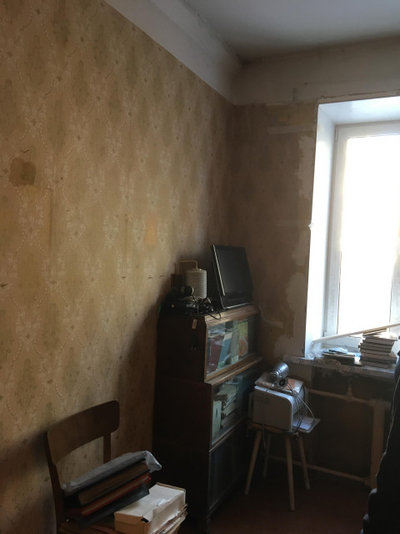
Previously, a low book cabinet had stood to the left of the window. The wall here was a bit bare; it was a well-lit but unremarkable corner.
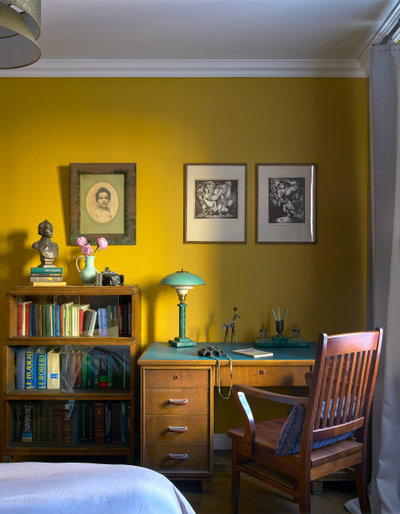
Svetlana left the bookcase in the room but moved it to the left and positioned an antique desk, which had belonged to the father of the owner, next to the window. The desk was restored and its top was replaced.
Overhead are two sketches from the Icelandic and Irish Sagas series by Ekaterinburg artist Vitali Volovich (1928-2018). Next to them is a photo of the first owner of this apartment – the owner’s great-grandmother.
Tell us…
What do you like about this sensitive renovation? Share your thoughts in the Comments.
Overhead are two sketches from the Icelandic and Irish Sagas series by Ekaterinburg artist Vitali Volovich (1928-2018). Next to them is a photo of the first owner of this apartment – the owner’s great-grandmother.
Tell us…
What do you like about this sensitive renovation? Share your thoughts in the Comments.

Related Stories
House Tours
Houzz Tour: A Midcentury Home With a Strong Indoor-outdoor Link
By Becky Harris
A nature-inspired renovation has given this ranch house a relaxed mood and a connection to the outdoors from most rooms
Full Story
House Tours
Houzz Tour: Warm Tones and Luxurious Surfaces in a City Townhouse
An earthy colour palette, hidden storage and well-placed texture add character and practicality to this London home
Full Story
Room Tours
Kitchen Tour: A Gorgeous Extension With a Leafy Glasshouse Feel
By Kate Burt
When the owners of this terraced house extended, they were keen to retain its period feel and highlight the garden
Full Story
Gardens
Garden Tour: A Bare Roof Terrace Becomes a Pretty, Sociable Space
By Kate Burt
A retired couple got help transforming their large rooftop into a gorgeous, welcoming, multi-functional retreat
Full Story
House Tours
Houzz Tour: A Smart Layout and Genius Storage in a Victorian Home
Flipping the standard layout and carving out excellent storage have turned this tired house into a brilliant family home
Full Story
House Tours
Houzz Tour: A Victorian House Brought Impressively Up to Date
By Jo Simmons
A cohesive layout and warm colours combined with energy-efficiency measures thoroughly modernise this terraced home
Full Story
Kitchen Tours
Kitchen Tour: An Open, Airy Space Made for Entertaining
Combining two separate rooms has improved flow and created a sociable open-plan kitchen, dining and seating space
Full Story
House Tours
Houzz Tour: A Family Home Inspired by its Seaside Location
Coastal colours and practical design combine to create a house that will adapt as the family grows
Full Story
Kitchens
5 Inspiring Before and After Kitchen Transformations
Whether you want to boost storage, incorporate original features or maximise your space, take ideas from these designs
Full Story
House Tours
Houzz Tour: An Airy, Scandi Finish for a Tall Victorian House
By Kate Burt
From a tricky inherited bath to a sticky-out staircase, on-site problem-solving led to a seamless update for an old home
Full Story
what a glorious renovation! among the best I have ever seen as an avid houzz reader. unpretentiously stylish, "intellectual" and Russian.. absolutely minor critique: she shouldn't have ripped out the beautiful door connecting living- and dining room - just to replace it with an odd looking fake fireplace.
We can learn so much from this renovation. So often, in my neighborhood, renovation means knock it down and build something three times bigger and with 2020's no-style style. Everything about these choices is personal, improving, and selective. Thank you for this one.
I love her colors so much. For me color is difficult to nail. I wish I had her talent. I end up spending tons of money on sample after sample and still it is not as exciting as what she has done here. Well done you.