Houzz Logo Print
emmelinewe

Biggest learning from a renovation?

12 years ago
last modified: 12 years ago
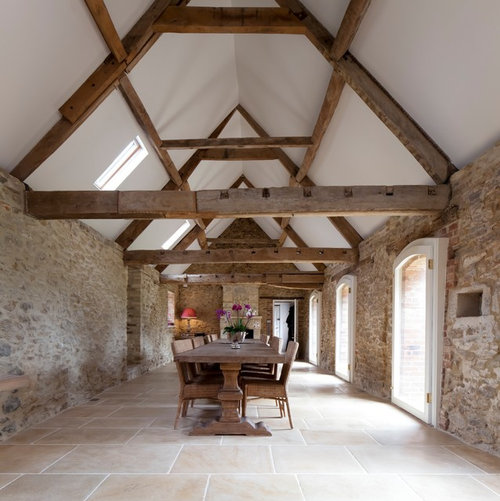
Whether it's your first renovation project or your 5th, there are always things you wished you had anticipated beforehand.

What would be your best word of advice to Houzzers who are currently renovating their homes (or thinking about it)? What have you learnt from your previous projects?

Residential Property Renovation · More Info

Comments (28)

  • 12 years ago
    That saying along the lines of "when you assume you make an 'ass' out of you and me" was the motto of my renovation. While many of us may hesitate to be high maintenance or may think that we are appropriately deferring to expertise, my lesson was to make sure every single detail is communicated ahead of time. Yes there are instances where I think a homeowner is justified in saying, why didn't they ask me, or I assumed this was standard, you don't want to be in that fight because lack of communication is going to come back on you whether it's ultimately fair or not.
  • 12 years ago
    last modified: 12 years ago
    Always anticipate and plan for extra time/budget for the unexpected things you run into.
  • Related Discussions

    Help with 3D Interior, garden and kerb appeal DESIGN of our extension and renovation

    Q

    Comments (9)
    I did set up account on Qtect, I am not sure the service offering at QTect provides the adequate level of interactivity for me to submit a detailed design brief. Good sales pitch though, but I am not sure I would be able to set and convey my expectations however the propective designers budgetary need is already baselined right from the onset, which equates to a one way street, what if the 3 options (from all the designer proposals) are all rubbish, I am not sure it is a good idea to commit to paying for work that does not involve focused consultation.
    ...See More

    What are your biggest design headaches?

    Q

    Comments (14)
    I've thought of a couple more.. how to hang art ie if you have art on different walls, how high over furniture, size of art over furniture etc (same for mirrors over fires) How to zone a space or open plan living area What size and how to place rugs section on general lighting including kitchen lighting how to create a focal point in a room (especially if you don't have a fire for example) or highlight architectural features etc how to disguise a tv tips on how to create a room on a budget might be a good one how to create a house that flows I think what would be useful in the general how to create a room is how to add texture, add cosiness, mix old and new, add personality, mix heights etc with just an overview of design rules (and breaking them!) as these are hard to find other than colour rules for the non-pros!
    ...See More

    **WIN** Tickets to the Homebuilding &Renovating Show London worth £36

    Q

    Comments (1)
    We haven't had any responses on here yet, looking forward to hearing your comments :-)
    ...See More

    Tell us: Do you have any home renovation regrets?

    Q

    Comments (32)
    Whilst I recognise there's a few tradespeople on here bemoaning fussy clients I have to say my biggest regrets when renovating my house was not being specific enough with trades! We had an electrician put in an extra light switch in the hall to control both the downstairs and upstairs lighting. He put it in a good 10-15cm lower than the other switch further along the same wall which looked completely ridiculous. Made him move it in line with the other one much to his annoyance. Another similar incident was with a vertical column rad for the kitchen - whilst I was specific enough this time to ask it be centered to the wall it was on, he installed it much higher than needed with about 30cm of pipe sticking out the bottom! It would have looked much better in line with the doorframe adjacent. Had to learn to live with that one. We had engineered wood floors put in upstairs - the fitter used the shortest wall in the smallest room to take a plumbline from. When it came into the hall it was obviously on a complete wonk. By this point I'd gotten a bit better at speaking up and ensuring we actually got what was needed (and paid for!). He had to take it up and re-lay using the hall as the plumbline. Looked so much better but he was extremely annoyed! After all this I learned to use masking tape to direct exactly where pipes/light switches/trim should be fitted so there was no room for 'interpretation'. I also forced myself to speak up more and advocate for what I really wanted. That said I'm a designer by trade so I generally know what I want and how to make it look good but was definitely a bit too shy to contradict trades in the beginning!
    ...See More
  • PRO
    12 years ago
    Add an extra week or two to the schedule from the get go, you'll need it in the end.
  • 12 years ago
    It helps a lot to be very easily accessible to the contractor and crew for any questions and clarifications. Can't remember how any times questions came up, and we were so glad we were on hand/on site to answer them. I agree that you shouldn't assume anything--that it's clear enough, that they'll make the choices you would, that they understand where you're trying to get to. Nobody thinks like you do. Nobody.
  • 12 years ago
    Well I haven't had anything professional done, but my husband and I just got a house and we did some DIY "reno" on things like the kitchen (painted cabinets, replaced appliances, new backsplash) and other odds and ends. As far as the kitchen went I would say: take how long you *think* it will take, and your budget, and double it at minimum. What I thought would be a 1-2 week, couple hundred dollar reno has now passed 3 weeks and will probably be 4 by the time we're done. Admittedly this is largely due to the lack of schedule overlap between me and my husband (I work a 9-5 shift, he works 4pm-12am). So we've had very little actual time together. So we do what we can solo, then have to wait for the weekends to do the bigger stuff.

    And of course there's all the unforeseens - like having to replace the oven because we broke it doing the cabinets (ceramic electric top cracked). We decided to go ahead and splurge on turning into a gas stove (which we've always wanted) so there was extra time/money in hiring the plumbers and electricians to get the hookups ready. Then installing it into the space that originally held a built-in but now needed to fit a slide-in oven required a lot of sawing, nail removal, more sawing, and elbow grease to make the hole the right size.

    So yea... it's surely been an interesting experience but be ready for a lot of hassle before the big payoff. Luckily we weren't technically *living* in the space while all this was going on.
    Emmeline Westin thanked Lauren Hartman
  • PRO
    12 years ago
    Consult an RIBA Chartered Architect if making structural changes - they can help you to maximise the opportunities of your property. Architects are professional problem solvers - it's their job to listen to your ideas and then turn them into something that is aesthetically pleasing, well-designed and functional. It can really SAVE money on a project to use an Architect and most offer an initial consultation free of charge.
  • 12 years ago
    If you wanna go DIY be sure to buy the right and quality equipment (no sheap drills, saws, electric material,...) because having the right quality tools for the right job is half the job. you don't have to buy everything, you can rent or if you buy sell the goods after the job.

    Be sure to have enough money on hand, know the law of murphy... it will happen to you.

    Take time for yourself and friends/family, people will understand that you don't have enough time for them if they know your going to do a reno on your house DIY. But that doesn't mean you can't take a break for one weekend to reconnect with them, use a blog/facebook/... to show them progress and to update them on what you're doing. What are you gonna do with your new house if you don't have anymore friends after the job.

    Your are more capable then you think
  • 12 years ago
    There is nothing like too much sockets. Sockets in the upper Installationszone (I have no idea what the english word for it is) keep the floor clean from cables and the toddlers from playing with the sockets. Make a plan where your ceiling beams are, so later you know where you can hang heavy things at the ceiling. The money you save when you hire a cheap craftsman you will spend later in whiskey to soothe your discontent about the lousy work.
  • 12 years ago
    last modified: 12 years ago
    After building one custom home and living through 2 major renovations, I have finally learned the following:

    Paln, Plan, Plan. Write it down and make sure your contractor addresses every item. Last minute whims and changes Cost; avoid deviations and add ons as much as you can.

    Be there everyday, as nansdrew and others have said.
    Mistakes get covered up quickly.

    Details: think about the plumbing and electrical outlet placement, (inside and outside), question the placement of air returns, and on and on.

    Duct work is boring, but can proper design make the difference in your comfort. While I am on the topic, please insist that your contractor cleans the ducting before your move-in. We found all manner of construction debris, nails, etc. in our floor vents.

    Call your insurance company, before you start.

    Get licenses and proof of insurance and references.

    Take pictures throughout and a record of your communication with the General contractor.

    Measure: If you have dimensions on your plan, measure as your project progresses. Our dining room is one foot shorter because we did not do this.

    I urge you to find out who (and when) crews will be in your home. You will feel better if you insist that the same contact person be on site, everyday. Crews and trade people change throughout the process. You will need a person in charge to communicate with. Unlikely that it will always be the signing contractor. (During a reno, we had another unscheduled crew show up just to chat with their buddies and they quickly swarmed all over the house. Some personal items are still missing.)

    Most people are honest and their work is exhausting. We love our home. But do protect your substantial investment.
    Best to all
  • 12 years ago
    My husband and I have just gone through a complete kitchen, dinning and sitting room reno And I do have a little advice for anyone renovating whether its a DIY or you hire a contractor. First and most important......plan plan plan. I planned and saved for my reno for 3 years but when it was time to start I knew exactly what I wanted, how much it was going to cost and if I was willing to compromise if need be.

    It’s not easy living through a reno. I came home one day not expecting to see the wall separating the kitchen and living room, in pieces, on the floor. It was at that moment that I realized what we were going to be living through for the next few months 6 to be exact. We did everything ourselves excluding the making and installing of our custom cherry kitchen cabinets. We saved a lot of money but it took twice as long.

    I love my new kitchen and can honestly say (because of planning) I wouldn’t change a thing!

    Renos are not easy but in the end they are so very well worth it!
  • 12 years ago
    Be prepared for the dust .... brick dust, plaster dust, the lot! We chose to live in our place throughout the renovation and extension work, but now wish we had moved out at certain times of the worst, messiest work. It's one thing coping with the stress of (self project managing) all the work, contractors, plant, materials purchasing, budget etc, it's quite another thing trying to live in it as well.
  • 12 years ago
    We have renovated 3 homes, one very extensively. Always assume it will cost double what your first dreaming are leading you. Second take a hard look at your square footage and issues that will never change. If these will be a problem then go modest. If it's big enough for 10+ years go bold.
    Time.... It will always take far more time than you plan, but that is the fun- relax and enjoy the journey.
  • 12 years ago
    Don't forget to plan for your pets! Machinery, noise, strangers in and out, all can be terrifying to them. During the remodel of two rooms of my four room house, my poor dog had to spend half the time tied on the back patio and the other half closed in my bedroom. He adapted, but during all the hullabaloo I had to remember to top off his water, see to his potty breaks, and let him know he was still loved.
  • 12 years ago
    Lots of helpful, common sense thoughts here. Thank you all.
    Even after living through a custom home build and two renos, we are starting to plan the reno on the Master Bathroom.
    Have the basic layout, selected the plumbing fixtures, linen closet, tiles and flooring (the big stuff).

    Aargh!
    ... the storage planning for the misc. stuff is bugging me. Meds, personal care, meds, health care, cosmetics, hair care, hubs shaving stuff, electric tooth brushes ... Yikes! Have started to sort out and measure everything. More than I realized.
    Would love to hear what bath organizing / storage you could not live without.
  • 12 years ago
    moggle73: cental drainage in the middle of the room and wall-mounted cupboards make the cleaning easy.
  • 12 years ago
    To add to what Linus wrote above....take photos of your wiring, plumbing runs and ductwork BEFORE dry walling begins! That way you know where things are behind the walls....for future reference if you remodel. I have done the same with gas lines, sewer lines in the yard, too, after they were installed. Just in case!
  • PRO
    12 years ago
    Always be sure to add at least 10 contingency to the total construction cost to determine your final budget. There will be some surprises and having the money set aside will reduce the stress that goes along with having construction in your home. I call it the "sleep good fund".
  • 12 years ago
    Your ideas of what you thought you wanted can change after it's been done. If you live in a cold climate, don't do renovations in winter or rent a pod and put your stuff somewhere else!Have morning meetings with your contractor, he actually suggested that I put bright pink post it notes on things that I had "issues" with. Usually, I left for work before they left for the day, so morning punch lists worked out really well!
  • 12 years ago
    It will always cost more and take longer, than you think.
  • 12 years ago
    Oh, and hire a well referenced pro.
  • 12 years ago
    Don't pay all monies up,front. But pay as job goes. Then hold some back. Til you are sure all is right.
  • 12 years ago
    We've been renovating for about a year until my husband got hurt so most of it's on hold for now. Here's a few things I learned:

    1) Renovating brings out all the differences in your personalities, good and bad. My husband is extremely meticulous and won't start something till he's absolutely sure how to do it. I genuinely appreciate this except when he doesn't tell me he isn't sure about something and needs to do reseach before we start the project. We learned to communicate more since neither of us can read the other's mind.

    2) It's going to cost twice as much as you budget, take twice as long, and if you're a DIYer, going to be twice as hard as you expect it to.

    3) Our relationship is more important than a paint color or style of door or trim. We can to an understanding that we both had to like something before it goes in. If one doesn't like it, we keep looking till we find what works. Of course that doesn't count for things like bathroom fixtures that have to be a certain style because of something with the plumbing. In those instances, my husband overrides anything I want style-wise.
  • PRO
    12 years ago
    last modified: 12 years ago
    The "takes twice as long and cost twice as much' advice is true for DIY projects, not for professionally delivered projects. Our projects run +/- 3 - 5% to budget and +/- 7 - 10% on scheduled duration. You get good at what you do lots of and generally there are few surprises for pros who know what to expect. Hire one if you want to eliminate the FUD (fear uncertainty and doubt). Go it alone if you want to live through the learning curve and stress out your time and bank account.
  • 11 years ago
    last modified: 11 years ago
    This is what I have learnt and highly recommend:

    1) Have a contract with the builder with a time frame specified for the work and a penalty clause. My 4 week renovation has taken 6 months costing me an extra 2k in storage fees (thus I care not for verbal promises for the future, it's what's written down that counts.)

    2) Neither add to or subtract from what you have agreed with the builder. If you add to he will want a fortune for the inconvenience, if you subtract, he won't deduct the cost and will find wrangles to avoid refunding. Make an agreement and stick to it.

    3) Insist, INSIST on each and every job being listed with a cost. So, if it's £30 to hang doors and a door isn't hung properly you know how much to with hold reasonably until the problem is rectified. This way the law is on your side.

    4) Unless you are a DIYer who can accomplish a pro finish - leave it to the pros. Otherwise all your hard work and effort will add nothing to your property and may even reduce it's value.

    5) Live in the property first. That way you will learn the best layout for rads, doors and furniture to suit your lifestyle and/or practical living. Get it right the first time and when it comes to selling the agent can confidently talk to potential purchasers about how they could site their furniture, how the space flows, how it has been professionally thought out and planned thus sticking out above the swathe of other properties in the same area which simply have a paint & carpet job done to be sold as re-furbished.

    6) Photograph every angle of every room before the builder starts. Then keep a photo record of his work as he goes along. Trust me he will be doing the same in order to claim you told him x when it was y (when it was really x.)

    7) Keep each and every receipt of your costs. So, if you have to buy tile trim at £20 each and he cuts one too short so you need to buy another, send him an email stating that you supplied a tile trim, it was cut too short by him, and he can expect another on day X. Then at the end of the job you can send him an email stating that you are happy with everything (hopefully) and will settle in full with the exception of the tile trim which cost you £20 and you have now deducted. Trust me, if you don't and you think you have a good relationship and let these things go as they are small amounts in order to keep a good relationship, he will think nothing of surprising you with a bill for an extra couple of grand for unforeseens (which you don't have to pay btw, as all costs must be agreed beforehand.) Plus small amounts soon add up to hundreds.

    8) The builder is not your friend (hopefully) but an employee. Treat him as such. Be polite but not over friendly and expect a professional service. Having used different builders on three seperate occasions they have all been dominant and bolshy with me until they meet my husband. Do not be afraid to hold your ground and when the builder threatens walking off the job simply because you have asked him why a pipe isn't sunk for eg.- tell him that if he does he is in the wrong and you will think nothing of getting another builder in to finish and pursuing him for the cost. Don't be initimidated. I have now three times, and the third time is most definitely the last.

    I hope this helps. These pointers have come from my bad experiences and are what I will follow on my next project.
  • 10 years ago

    A successful project is 2/3rds planning and 1/3 execution. In 2016 we will open up the kitchen diner space - we have been in the planning mode for 1- years now. You more planning you do the money you save and the better outcome you will have on your project.

  • 10 years ago
    We've been through two rents/custom builds - with professionals, since we tend to be less DIY here in India. But I learned some lessons and some tips that are invaluable along the way. Won't add to the obvious but agree heartily with the plan at least 30% more money/time than your estimates.

    Also

    1. It helps to have reference pictures. I found Houzz super useful for that. I saved references for everything.

    My contractor did an especially wise thing: he took colour printouts of individual cabinets/woodwork/details and stuck it on the wall in front of the area where it was to be done.

    That way - even if a revolving roster of workers came in to do the job, there was no risk of miscommunication about the detailing

    2. I don't know about other households but we found we almost never have as many electrical sockets as we'd like and ugly wires / extension cables were the bane of my life. We really went all out to take care of that: just at our bedsides for instance both my husband and I each have 3 sockets available and some days I find we're almost using them all between phone charger / laptop / iPad / lamp etc.

    3. This isn't a construction learning as much as an aesthetic one but for both cabinetry and curtains - go as high as you can toward the ceiling. My kitchen cabinets, bookshelves etc all go up to the ceiling and it adds tremendously to the impression of height. Ditto for curtains - your window may start lower but if your curtain rods and drapes start virtually at the ceiling it gives the room the illusion of height.

    4. If you're getting custom paint, buy an extra can for touch ups later. Sometimes it's hard to find the same shade and it saves a ton of bother. Ditto for tiles - buy an extra box of tiles used in your most high-traffic areas. I didn't - and when my bathroom sprung a leak some tiles needed to be removed to fix it and broke in the process. I wished I'd invested in a box extra then - they were out of stock when I needed them.
  • 10 years ago

    Do your homework regards sourcing things. I always try to get materials from places that supply the trade to cut out the middle man. I use my electrician, plasterer, carpenter etc because they are the best, not the ones that a contractor would use. This means lots of co-ordination but saves a fortune.