We all love the idea of maximising the sunlight that floods into our internal spaces, and as the capabilities of glass construction increases we are using more and more expansive glass in our construction and our designs; glass curtain walling, glass roofs, even glass floors.
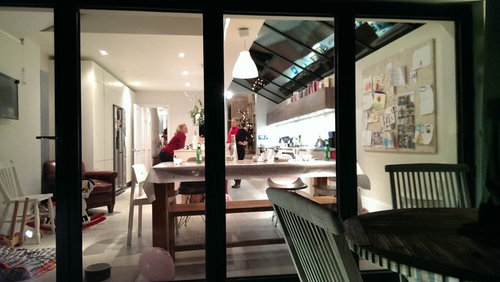
This large expanse of glass can have its drawback, as this day time luxury does have a darker side… the black of night.
That reason you used every inch of glass for daytime light, now appears uncovered as a dark and reflective surface. This can create an oppressive feeling internally as the ceilings are no longer open to the sky, but are closing in on you, and in an urban environment this turns your house into a glowing fish tank.
Yes, you can cover these with a multitude of curtains and blinds, however after several weeks of ‘hoisting the sails’ you start to leave the occasional one down and before you know it you don’t quite have that tidal wave of light that you started out with. You also start to bring down the blinds during the day to try to limit your solar gains and block out the blinding low rising winter sun glare.
I love these expanses of glass more than anyone and when there is a spectacular view on the other side these need to be opened and left uncovered to their full expanse. However, one always needs to remember the two sides of the glass when designing these spectacular structural features, as what's right for the daytime isn't always right at night.




Related Discussions
Structural pillar
Q
HELP AND IDEAS! Two bed ground floor flat side return/extension
Q
How to marry up two specific glass spaces
Q
structural engineer - from the builder or architect side?
Q