

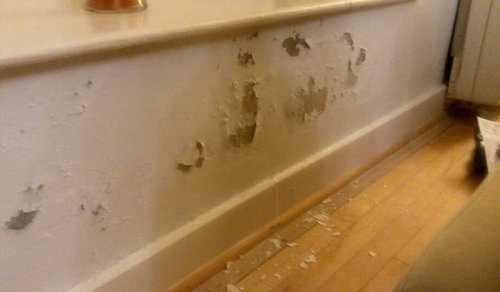
Peeling paint, possible damp?
9 years ago

Featured Answer
Sort by:Oldest
Comments (15)
 PRO9 years ago
 9 years ago
Related Discussions
Damp/Mold issue?
Comments (8)I’m no expert on this but does seem to be a problem with poor ventilation. Quite common especially with older properties as new additions such as upvc windows, insulation, blocked up chimneys, damp proofing, etc. etc. basically means that any moisture in the air has nowhere to go and as the weather turns colder that moisture will be attracted to cold spots such as windows and exterior walls. This condensation ends up a breeding ground for mold which I think is what you’re seeing here. But like I say I’m no expert so I’d get a second opinion and maybe a damp specialist to rule out any other underlying causes....See MoreDamp problems - advice needed
Comments (5)Did you have a damp report before renovating, and did you have specialists in to do the renovations? If so, the work might be under guarantee??? If not, I would get a damp specialist around - they usually come and give free advice....See MoreHelp diagnosing peeling paint
Comments (4)Whats above the room? Have you had a look outside to see there are any noticeable cracks/damage to the render? Are your gutters clear? Evidence of a leaky external pipe? Peeling can also occur when if the paint hasn’t adhered to the wall. In the past (and present) people misguidedly PVA freshly plaster walls before decorating which causes all sorts of problems. The moisture from the paint can reacticave the PVA. Is the wall gummy in areas?...See MoreAdvice needed on painting over peeling paint please?
Comments (5)Walls were not misted. Plastered walls should have a thinned coat of paint over them first to help seal the plaster. Then apply paint normally over the top. You'll have to keep going with removing the top coat untill it stops travelling/peeling to a firm enough edge. You can use Zinnser Peelstop to seal the wall or Zinnser Gardz to seal it as well. Once dried fill the edges of the paint with filler, sand down, touch up the filler with paint and let it dry. Then recoat the wall as normal. Decorating as all about preparation and this is a typical example of poor preparation, easily fixed....See More- 9 years ago
- PRO9 years ago
 9 years ago
- PRO9 years agolast modified: 9 years ago
- 9 years ago
- 9 years ago
- PRO9 years ago
- 9 years ago
 9 years ago
- 9 years ago
- PRO9 years ago
 PRO9 years ago



louisecampbell09