

Merchant House
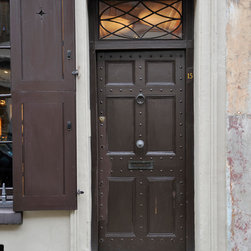
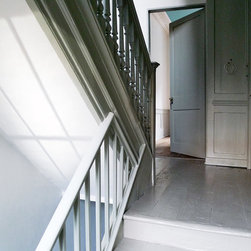
Newly built in 1718 by Samuel Worrall, but the uncertainty about the actual responsibility for building is very apparent and It has a rebuilt front of about 1800 in the regency style, in yellow brick with gauged flat arches of red brick to the two windows of each upper storey.
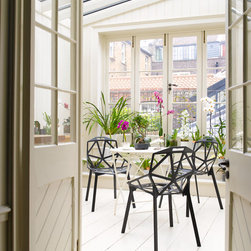
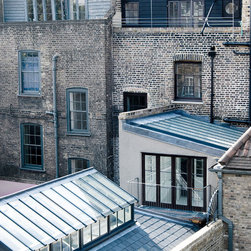
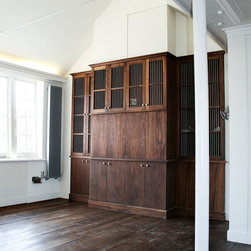
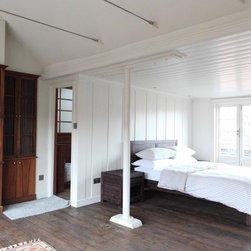
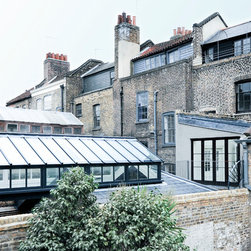
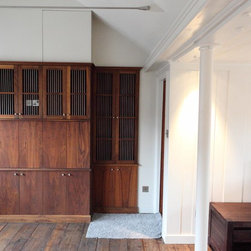
The aim was to remodel the interior of the weavers loft, creating a large open plan workspace incorporating a finely detailed bureau. At first floor level the roof to the former kitchen extension to the rear is now glazed, creating a north facing winter garden, to house orchids of many varieties. The unsuitable nineteenth century industrialized glazed windows were removed, providing access to the roof of the workshop as well as light and air for the winter garden.
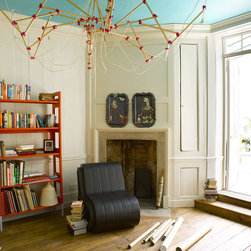
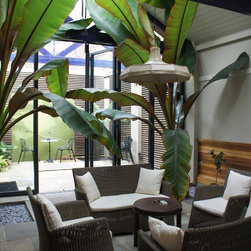
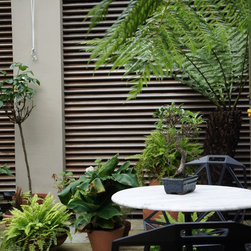
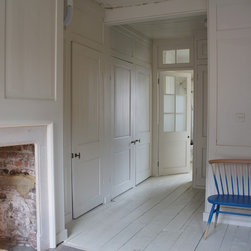
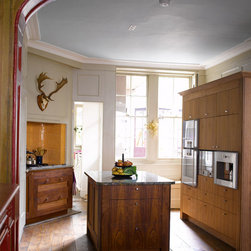
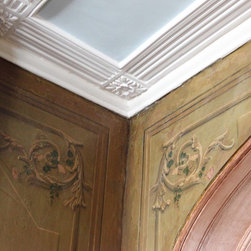
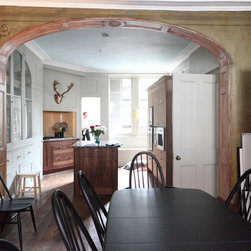
At the ground floor where a beautiful room had been created for a wedding in the 1800’s in the regency style of that period, it was the aim to utilize the interconnecting front and back rooms to create a formal dining and kitchen space, leading through a scullery to the studio space at the rear which is to be a palm house and, through folding and sliding doors, a garden space. A new outdoor room capable of being used all year round is created, whilst respecting the integrity of the existing studio glass, light and form. The external courtyard garden created offers an attractive south facing wall and space, without loss of privacy.
The aim was to remodel the interior of the weavers loft, creating a large open plan workspace incorporating a finely detailed bureau. At first floor level the roof to the former kitchen extension to the rear is now glazed, creating a north facing winter garden, to house orchids of many varieties. The unsuitable nineteenth century industrialized glazed windows were removed, providing access to the roof of the workshop as well as light and air for the winter garden.
At the ground floor where a beautiful room had been created for a wedding in the 1800’s in the regency style of that period, it was the aim to utilize the interconnecting front and back rooms to create a formal dining and kitchen space, leading through a scullery to the studio space at the rear which is to be a palm house and, through folding and sliding doors, a garden space. A new outdoor room capable of being used all year round is created, whilst respecting the integrity of the existing studio glass, light and form. The external courtyard garden created offers an attractive south facing wall and space, without loss of privacy.
Country: United Kingdom