

Japanese Knotweed Removal – Identifying the Plant in Various Seasons
As a homeowner, you will want to identify the presence of Japanese knotweed in your home as early as possible. This plant is highly resilient and immensely invasive; it doesn’t only damage your property but can also affect adjacent buildings. The presence of Japanese knotweed can also devalue your property, as its presence might cause potential buyers to refuse to pay the mortgage.
Nonetheless, the identification of an infestation caused by the Japanese knotweed can be a bit challenging. Find out more here about this plant. To make things easier for you, we have compiled a list of signs of Japanese knotweed infestation according to the various seasons of the year.
Identifying Japanese Knotweed in Spring
This Japanese plant is quite active during the spring season. You will want to watch out for spears that resemble asparagus. The color of these shoots is often red or purple. The stems tend to grow stronger to the point of resembling bamboo. During spring and summer, you can expect the plant to grow up to ten centimeters daily.
The emerging leaves on the stems will follow a zig-zag pattern.
Identifying Japanese Knotweed in Summer
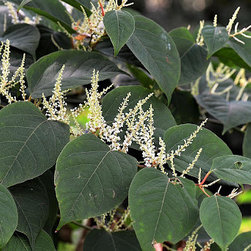
When it comes to the summer season, the Japanese knotweed becomes fully formed. Its leaves tend to grow up to two hundred millimeters long. The long heart-shaped leaves can form a dense canopy, and the canes can grow as tall as 5.5 meters, forming a dense jungle of upright stems.
As the warmer season continues, white flowers begin to grow along the leaves, forming a pretty lush green foliage. It is important to mention here that during the summer season, Japanese knotweed becomes the utmost visible, but it can still become a bit challenging to identify the plant due to other plants and flowers growing along with the Japanese knotweed.
It might be a good idea to call professional Japanese knotweed services for the identification and removal of the plant during the summer.
Identifying Japanese Knotweed in Autumn
While the dense covering of the leaves of Japanese knotweed remains during autumn, the leaves begin to turn yellow and orange. Also, the leaves begin to become brittle until they completely wither away b October.
The withering of the leaves can make it appear as if the plant has died, so you might find it difficult to identify the plant in your garden. But it is still active underground, where it keeps expanding.
Identifying Japanese Knotweed in Winter
It can be a bit tricky to identify the Japanese knotweed in the winter season because, by the start of the coldest season of the year, the leaves and flowers will be gone. The only thing that remains are the tall clustered shoots of the plant. Despite that the canes will wither and die off, these will remain erect during the winter.
Now, you might think that the winter means the end of the plants; however, this isn’t true for Japanese knotweed. The dormant rhizomes wait for spring to restart their growth cycle. All you need to do is to identify the rhizomes and tackle the problem with Japanese knotweed removal.
Nonetheless, the identification of an infestation caused by the Japanese knotweed can be a bit challenging. Find out more here about this plant. To make things easier for you, we have compiled a list of signs of Japanese knotweed infestation according to the various seasons of the year.
Identifying Japanese Knotweed in Spring
This Japanese plant is quite active during the spring season. You will want to watch out for spears that resemble asparagus. The color of these shoots is often red or purple. The stems tend to grow stronger to the point of resembling bamboo. During spring and summer, you can expect the plant to grow up to ten centimeters daily.
The emerging leaves on the stems will follow a zig-zag pattern.
Identifying Japanese Knotweed in Summer
When it comes to the summer season, the Japanese knotweed becomes fully formed. Its leaves tend to grow up to two hundred millimeters long. The long heart-shaped leaves can form a dense canopy, and the canes can grow as tall as 5.5 meters, forming a dense jungle of upright stems.
As the warmer season continues, white flowers begin to grow along the leaves, forming a pretty lush green foliage. It is important to mention here that during the summer season, Japanese knotweed becomes the utmost visible, but it can still become a bit challenging to identify the plant due to other plants and flowers growing along with the Japanese knotweed.
It might be a good idea to call professional Japanese knotweed services for the identification and removal of the plant during the summer.
Identifying Japanese Knotweed in Autumn
While the dense covering of the leaves of Japanese knotweed remains during autumn, the leaves begin to turn yellow and orange. Also, the leaves begin to become brittle until they completely wither away b October.
The withering of the leaves can make it appear as if the plant has died, so you might find it difficult to identify the plant in your garden. But it is still active underground, where it keeps expanding.
Identifying Japanese Knotweed in Winter
It can be a bit tricky to identify the Japanese knotweed in the winter season because, by the start of the coldest season of the year, the leaves and flowers will be gone. The only thing that remains are the tall clustered shoots of the plant. Despite that the canes will wither and die off, these will remain erect during the winter.
Now, you might think that the winter means the end of the plants; however, this isn’t true for Japanese knotweed. The dormant rhizomes wait for spring to restart their growth cycle. All you need to do is to identify the rhizomes and tackle the problem with Japanese knotweed removal.