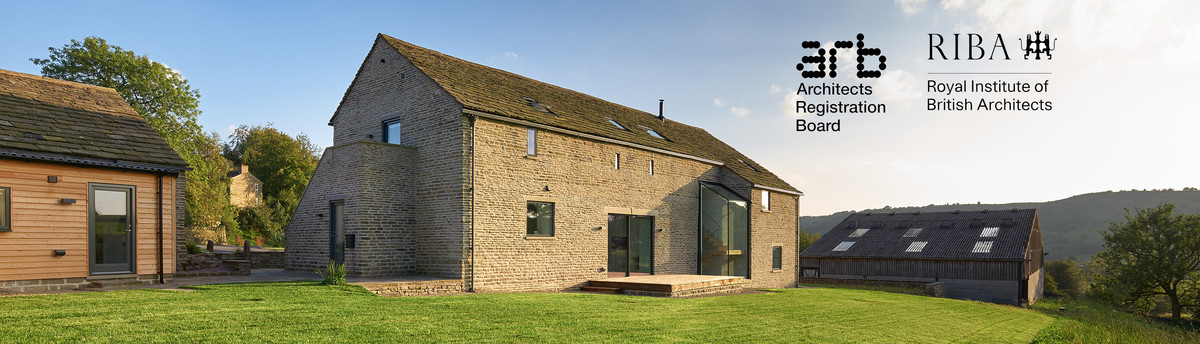

Kermincham Hall Barns - Unit4
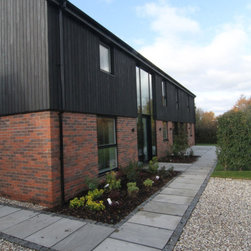
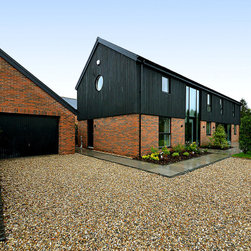
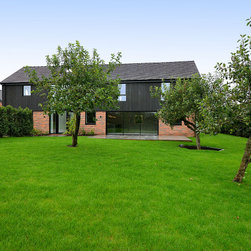
New Orchard Barn is designed to have the appearance of a converted barn, while making reference to the black timber stables which stood on the site. The agricultural character is enhanced by simple detailing, traditional materials and the use of round windows which respect the older traditions of farm buildings. .
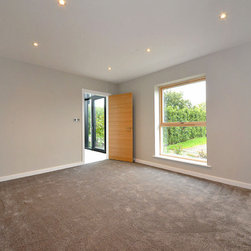
The building is one sided, designed to face away from the nearby Coach House, towards the orchard garden and countryside views, while a window from the master bedroom gives a view over the pond and entrance drive.
The design of the house realises the maximum potential in a strictly defined volume. Four double bedrooms face the garden and countryside views. The minimal circulation space is located at the rear of the house, leaving void space for a large double height hall, lit by a full height glazed screen and rooflights
The Wow Factor starts with the approach to the house, along a wooded drive leading through a deer park to enter the site opposite an ancient pond. The new shared drive leads past the pond to enter the orchard and sweeps round to the parking area in front of the house.
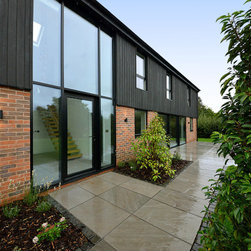
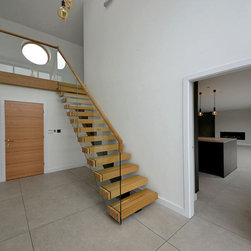
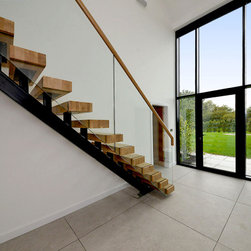
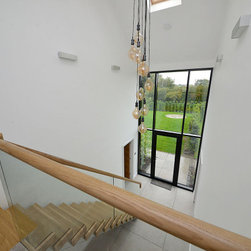
The entrance hall is an impressive double height space, lit by a wall of glass at the front and rooflights above. The glulam ridge beam is mirrored in the chunky timber of the staircase, emphasized by the minimal glass balustrade. Oak internal doors continue the timber theme throughout the dwelling.
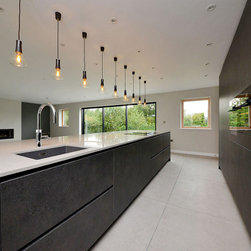
At the heart of the house is the expansive open-plan kitchen/dining/family space, with triple sliding doors leading out to the rear garden. The sleek contemporary kitchen has a large island incorporating a boiling tap, induction hob and two bar fridges; the full height units at the rear provide a backdrop to the room and accommodate ovens, larder, fridge and a secret working space behind slide-away doors.
The building is designed to be highly insulated and airtight. Hayes and Partners specified a multi-foil insulation which also acted as an airtight barrier, and highly insulated windows. Timber glulam beams were specified instead of steel, as a low carbon material, setting a theme for the design of the oak block staircase. The burnt timber cladding is sourced from a local supplier; the timber comes from Cannock Chase.
The east/west orientation of the building makes best use of morning and evening sun; windows are restricted on the north elevation. Rooflights allow natural light into all rooms.
The design strives for simplicity in appearance. The heads of the window line through with the base of the timber cladding. The black timber has a warm, deep colour which contrasts with the rich colours in the bricks. The clay tiles, chosen to match the black cladding, with the slimline eaves detail, and black windows give the upper floor a neat, uniform appearance.
Proportions of the windows are designed to echo the character of the neighbouring Georgian Coach House, which give the house a pleasing appearance. The use of underfloor heating on the ground floor leaves the walls free for furniture and allows for full-height glazing in feature spaces.
The new drive sweeps along the edge of the orchard to serve a parking area and garage shared by the two new-build dwellings. As the house entrance and garden doors are on the same elevation, care has been taken to screen the garden from view. As the garden is east facing, a circular paved area has been added to catch the evening sun.
The detailed landscape scheme was designed by Barnes Walker. The house was located where it had least impact on existing orchard trees. The landscape design includes a new orchard stretching into the paddock.
Meeting the Budget
The practical, efficient design meant the house has been completed within the target construction budget of £300,000, including external works. The design strategy was to focus on key features, the kitchen, staircase, sliding doors, glulam beams and timber cladding, while keeping the rest of the building simple.
Meeting Demand
The finished house looks smart and contemporary and appeals to a wide market. An offer of the asking price was received, before the property was officially released onto the open market. The house meets the demands of the market and exceeded the expectations of the client developer.
The building is one sided, designed to face away from the nearby Coach House, towards the orchard garden and countryside views, while a window from the master bedroom gives a view over the pond and entrance drive.
The design of the house realises the maximum potential in a strictly defined volume. Four double bedrooms face the garden and countryside views. The minimal circulation space is located at the rear of the house, leaving void space for a large double height hall, lit by a full height glazed screen and rooflights
The Wow Factor starts with the approach to the house, along a wooded drive leading through a deer park to enter the site opposite an ancient pond. The new shared drive leads past the pond to enter the orchard and sweeps round to the parking area in front of the house.
The entrance hall is an impressive double height space, lit by a wall of glass at the front and rooflights above. The glulam ridge beam is mirrored in the chunky timber of the staircase, emphasized by the minimal glass balustrade. Oak internal doors continue the timber theme throughout the dwelling.
At the heart of the house is the expansive open-plan kitchen/dining/family space, with triple sliding doors leading out to the rear garden. The sleek contemporary kitchen has a large island incorporating a boiling tap, induction hob and two bar fridges; the full height units at the rear provide a backdrop to the room and accommodate ovens, larder, fridge and a secret working space behind slide-away doors.
The building is designed to be highly insulated and airtight. Hayes and Partners specified a multi-foil insulation which also acted as an airtight barrier, and highly insulated windows. Timber glulam beams were specified instead of steel, as a low carbon material, setting a theme for the design of the oak block staircase. The burnt timber cladding is sourced from a local supplier; the timber comes from Cannock Chase.
The east/west orientation of the building makes best use of morning and evening sun; windows are restricted on the north elevation. Rooflights allow natural light into all rooms.
The design strives for simplicity in appearance. The heads of the window line through with the base of the timber cladding. The black timber has a warm, deep colour which contrasts with the rich colours in the bricks. The clay tiles, chosen to match the black cladding, with the slimline eaves detail, and black windows give the upper floor a neat, uniform appearance.
Proportions of the windows are designed to echo the character of the neighbouring Georgian Coach House, which give the house a pleasing appearance. The use of underfloor heating on the ground floor leaves the walls free for furniture and allows for full-height glazing in feature spaces.
The new drive sweeps along the edge of the orchard to serve a parking area and garage shared by the two new-build dwellings. As the house entrance and garden doors are on the same elevation, care has been taken to screen the garden from view. As the garden is east facing, a circular paved area has been added to catch the evening sun.
The detailed landscape scheme was designed by Barnes Walker. The house was located where it had least impact on existing orchard trees. The landscape design includes a new orchard stretching into the paddock.
Meeting the Budget
The practical, efficient design meant the house has been completed within the target construction budget of £300,000, including external works. The design strategy was to focus on key features, the kitchen, staircase, sliding doors, glulam beams and timber cladding, while keeping the rest of the building simple.
Meeting Demand
The finished house looks smart and contemporary and appeals to a wide market. An offer of the asking price was received, before the property was officially released onto the open market. The house meets the demands of the market and exceeded the expectations of the client developer.
Project Cost: £750,001 - £1,000,000