
The Elms
When CCD was first asked to look at The Elms it consisted of two cottages, one inhabited and the other in ruins. In ‘The Guernsey House’ book John McCormack notes that the building was likely to have originally been a single storey long house dating from the early 15th Century.
Over the years the south part of the building had been maintained as a habitable dwelling, whereas the north part had fallen into disrepair. Along with the walls, there were various features still in existence with an Évier being of particular note. This would have been used as a kitchen sink, and the trough type at The Elms is one of only two of this design in the Island.
CCD initially recommended stabilising the original structure. Plant growth was removed and the walls capped with lime mortar to prevent further water ingress. Once this work was carried out attention was given to the use of the building.
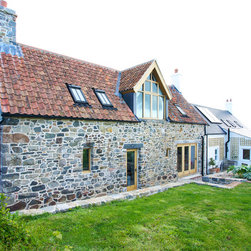
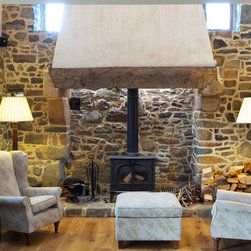
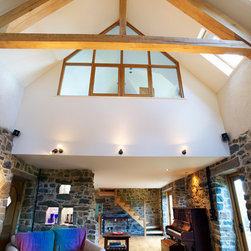
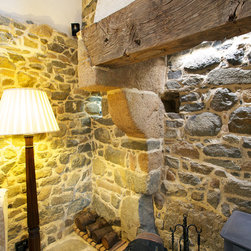
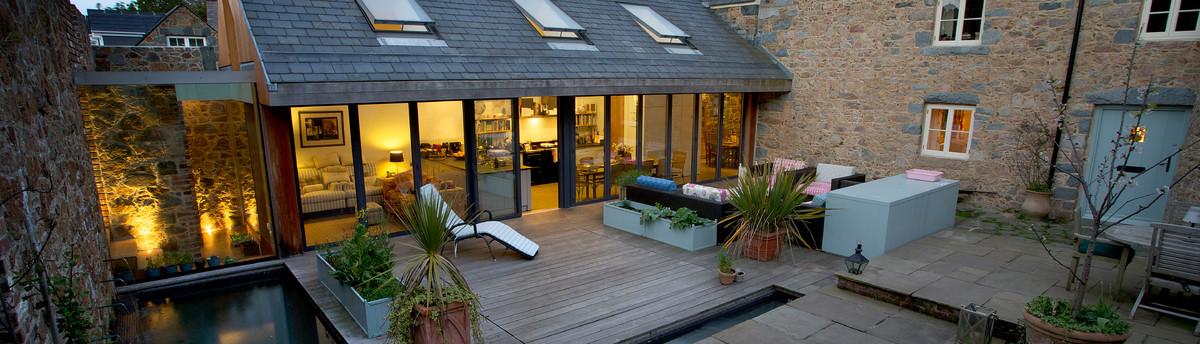
We developed proposals with our Clients for a scheme which provided an additional Living Room, Bedroom and Ensuite Shower Room. The scheme aimed to present a traditional elevation to the road frontage with existing window openings reinstated and a clay pantile roof. The garden elevation was treated in a more contemporary manner to maximise the views and south-west orientation, allowing light into the interior. Internally, the existing features were retained and fireplace reconstructed.
The work also included removing the existing render from the inhabited cottage, re-pointing the exposed wall with lime mortar and re-roofing with natural slate.
A new porch to the main entrance and detached garage were also designed to complete and complement the overall setting of the dwelling.
The project brought the cottage back into the use for which it was originally intended, turning a ruin into part of a family home. The work was carried out by a local building contractor in a sensitive manner retaining the features of quality and character of the ruin, yet providing space suitable for current living standards.
Over the years the south part of the building had been maintained as a habitable dwelling, whereas the north part had fallen into disrepair. Along with the walls, there were various features still in existence with an Évier being of particular note. This would have been used as a kitchen sink, and the trough type at The Elms is one of only two of this design in the Island.
CCD initially recommended stabilising the original structure. Plant growth was removed and the walls capped with lime mortar to prevent further water ingress. Once this work was carried out attention was given to the use of the building.
We developed proposals with our Clients for a scheme which provided an additional Living Room, Bedroom and Ensuite Shower Room. The scheme aimed to present a traditional elevation to the road frontage with existing window openings reinstated and a clay pantile roof. The garden elevation was treated in a more contemporary manner to maximise the views and south-west orientation, allowing light into the interior. Internally, the existing features were retained and fireplace reconstructed.
The work also included removing the existing render from the inhabited cottage, re-pointing the exposed wall with lime mortar and re-roofing with natural slate.
A new porch to the main entrance and detached garage were also designed to complete and complement the overall setting of the dwelling.
The project brought the cottage back into the use for which it was originally intended, turning a ruin into part of a family home. The work was carried out by a local building contractor in a sensitive manner retaining the features of quality and character of the ruin, yet providing space suitable for current living standards.