

Two Wells
When we were initially approached by the client in 2017 they had already submitted a planning pre-application for a large two-storey new build house having previously worked with another architecture practice.
The client brief when developing the new build scheme had been simple;
Create a family home with room to grow (three small children and a fourth on the way)
Provide a series of visually interconnected living spaces that would allow the family to spend time together without having to occupy the same room
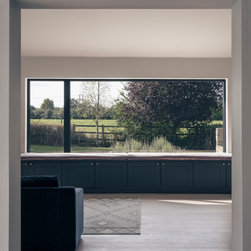
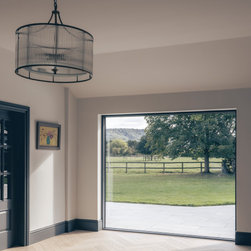
Improve sightlines out into the garden and surrounding site
At c.7,750 sqft, the proposed design would have been substantially larger than the existing property (3,875 sqft) and required the complete demolition of the single-storey bungalow, including all below-ground structures.
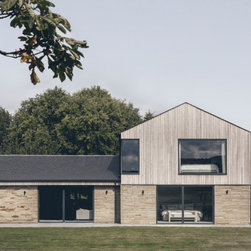
Although impressive, we felt the proposed design was unnecessarily big and that the client brief, could be met by reconfiguring and optimising the existing layout, with a scaled-back first-floor extension providing only the required amount of additional GIA (c.1,100sqft).
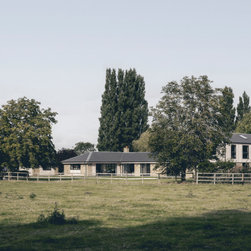
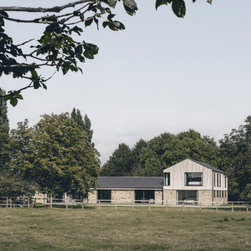
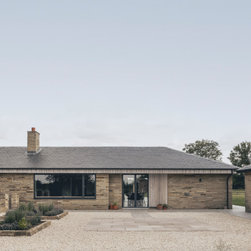
Despite the existing building having fallen into disrepair, the envelope was in reasonable condition and clearly salvageable, with the current ad hoc layout a primary source of frustration for the client. Furthermore, upon visiting the property for the first time, we were struck by how the building sat so comfortably within the site, with the existing footprint and orientation providing fantastic views out onto the garden and surrounding fields.
At this point, we took the decision to actively try and dissuade the client from demolishing the existing building, promoting instead a scaled-back approach that would not only reuse as much of the existing building as possible but also retain the charm and character of this unique property.
By interrogating the brief and understanding the client’s value system we were able to engage in a structured conversation about the cost-benefits of repurposing the existing building, which then formed part of a wider conversation about the environmental benefits of a deep retrofit vs new build. This approach was well-received by the client and set the groundwork for further conversations about thermal performance and environmental responsibility, and how these could become design drivers for the project.
The results have been fantastic and the client is delighted with their refurbished home which in the 12 months since completion has used 75-80% less fuel for heating and hot water, with the refurbished roof providing the greatest uplift in performance, followed by the newly insulated cavity walls and double glazed windows.
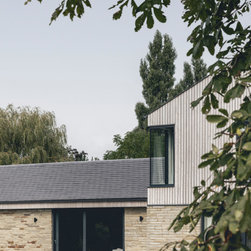
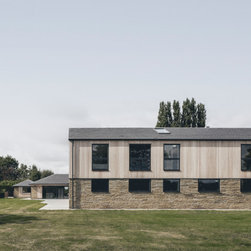
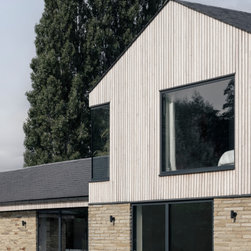
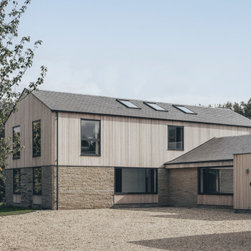
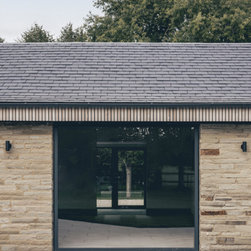
The refurbishment has given the house a new identity that reflects its current occupants, whilst retaining the charm and character of those that have lived there previously. The enlarged building still sits comfortably within its surroundings, with the first-floor extension providing fantastic views and improved connection to the wider surrounding site.
The client brief when developing the new build scheme had been simple;
Create a family home with room to grow (three small children and a fourth on the way)
Provide a series of visually interconnected living spaces that would allow the family to spend time together without having to occupy the same room
Improve sightlines out into the garden and surrounding site
At c.7,750 sqft, the proposed design would have been substantially larger than the existing property (3,875 sqft) and required the complete demolition of the single-storey bungalow, including all below-ground structures.
Although impressive, we felt the proposed design was unnecessarily big and that the client brief, could be met by reconfiguring and optimising the existing layout, with a scaled-back first-floor extension providing only the required amount of additional GIA (c.1,100sqft).
Despite the existing building having fallen into disrepair, the envelope was in reasonable condition and clearly salvageable, with the current ad hoc layout a primary source of frustration for the client. Furthermore, upon visiting the property for the first time, we were struck by how the building sat so comfortably within the site, with the existing footprint and orientation providing fantastic views out onto the garden and surrounding fields.
At this point, we took the decision to actively try and dissuade the client from demolishing the existing building, promoting instead a scaled-back approach that would not only reuse as much of the existing building as possible but also retain the charm and character of this unique property.
By interrogating the brief and understanding the client’s value system we were able to engage in a structured conversation about the cost-benefits of repurposing the existing building, which then formed part of a wider conversation about the environmental benefits of a deep retrofit vs new build. This approach was well-received by the client and set the groundwork for further conversations about thermal performance and environmental responsibility, and how these could become design drivers for the project.
The results have been fantastic and the client is delighted with their refurbished home which in the 12 months since completion has used 75-80% less fuel for heating and hot water, with the refurbished roof providing the greatest uplift in performance, followed by the newly insulated cavity walls and double glazed windows.
The refurbishment has given the house a new identity that reflects its current occupants, whilst retaining the charm and character of those that have lived there previously. The enlarged building still sits comfortably within its surroundings, with the first-floor extension providing fantastic views and improved connection to the wider surrounding site.
Project Year: 2021
Country: United Kingdom