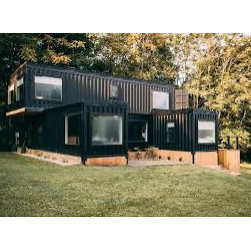


Container home guide
Before writing the article, please prepare a short, engaging opening that speaks to the dream of owning a home , the limited budget , and the desire for an original dwelling . This opening should demonstrate that a container home can be] a concrete and realistic solution, while using formal address (using the author's name) in accordance with the editorial guidelines, and should be no more than 3 to 4 sentences long.
Understanding the concept of container housing
A container home is based on transforming standardized shipping containers into habitable modules that are structurally robust and easy to transport. We reuse a steel structure designed to withstand the rigors of international freight, creating a modular and sustainable living space. The principle involves adapting these metal boxes (cutouts, reinforcements, insulation, openings) to meet current comfort and energy efficiency requirements.
This type of modular construction is distinguished by its rapid implementation: the structural elements are prefabricated, thus reducing the need for traditional construction work. The containers can be placed side-by-side or stacked to create a variety of spaces, from studios to multi-module family homes. The approach aligns with the principles of reuse and carbon footprint reduction, while offering a contemporary aesthetic reminiscent of industrial architecture.
Standardization (dimensions, lifting points, mechanical resistance) simplifies design and on-site logistics. It also allows for anticipating cutouts, spans, and the placement of technical networks. In a reliable container home guide , the goal is to transform a logistics product into a true modular home , compliant with standards and adapted to your lifestyle.
Advantages and limitations of container homes
The advantages of a container home are numerous: potentially lower cost per square meter than traditional construction, shorter construction times, and highly modular design. Starting with an existing structure reduces the volume of new materials and aligns with an eco-responsible housing approach . The industrial aesthetic allows for a contemporary and original design , appreciated in current architectural projects.
The main drawbacks of a container home concern thermal and acoustic insulation, thermal bridge management, and condensation within a metal envelope. Structural constraints necessitate reinforcing cut-out areas (windows, connections between modules), which can increase the budget. Corrosion, the treatment of existing paintwork, and compliance with recent environmental standards (such as RE2020) must also be considered.
From a regulatory standpoint, some municipalities remain hesitant due to aesthetic concerns or landscape integration issues, which can complicate the process. The resale value of a container home will depend heavily on the quality of construction, administrative compliance, and the local perception of this type of housing. Our role is to provide honest, detailed, and technical information so you can make an informed decision.
Administrative procedures to anticipate
Like any container home construction , your project must comply with the local planning regulations. The first step is to consult the Local Urban Development Plan (PLU) to verify buildability, height restrictions, volume limits, and exterior appearance requirements. This analysis will determine whether a simple prior declaration is sufficient (for small areas or outbuildings) or if a building permit is required.
Beyond a certain floor area threshold, hiring an architect becomes legally required, even for a container home. It's also essential to incorporate environmental regulations (such as RE2020 ) regarding thermal performance and energy consumption from the outset of the building permit application. Insurance policies (structural damage, ten-year warranty for contractors, and public liability) must be arranged in advance to secure the construction site and future resale.
We recommend preparing a complete file: plans, sections, landscape integration, and technical specifications for container house insulation and energy systems. Prior discussions with the planning department can alleviate visual concerns or worries about the "metal box" effect. A well-structured administrative process reduces the risk of refusals, appeals, and construction delays.
Choosing your land and implementing your project
The choice of land is crucial for a container home project , as delivery logistics impose certain constraints. Sufficient access for container trucks and cranes must be guaranteed, with clear access roads and an appropriate turning radius. The soil bearing capacity must be compatible with the type of foundation planned, which often necessitates a preliminary geotechnical study.
The orientation of the land strongly influences the thermal comfort and natural light of the future home. We favor layouts that open large windows to the south and protect the facades most exposed to wind and rain. Connection to utilities (water, electricity, sewage, telecommunications) must be assessed, as significant distances can increase the overall budget .
The placement of the modules must balance natural light, privacy from neighbors, and optimal passive solar gain. Containers can create patios, sheltered terraces, or staggered volumes to improve thermal and acoustic comfort. Finally, it is essential to check local constraints (flood zones, heritage areas, easements) which may limit the height, color, or facade materials.
Select the appropriate containers
The main types of shipping containers used for housing are 20-foot, 40-foot, and High Cube models, which offer increased interior height. The choice depends on the desired surface area, transport constraints, and the floor plan. We often recommend "one-trip" containers or those in very good structural condition to minimize the need for extensive repairs to address corrosion and deformation.
When purchasing a vehicle, several points require careful attention: check for rust perforation, major impacts, and chassis twisting. It is also crucial to inquire about previously transported goods to avoid the presence of harmful chemical residues. A thorough visual inspection, ideally supplemented by a technical report, will protect you from unpleasant surprises during the conversion process.
To compare offers, we advise you to look at the origin, certification level, delivery conditions, and warranties offered by the supplier. A specialized container home guide , such as the website guide maison container, can help you understand the technical specifications and price differences. A rigorous selection of containers is the foundation of a reliable, sustainable, and compliant project.
Plan design and space organization
The design of the plan involves transforming standardized volumes into a fluid and comfortable living space. We begin by determining the number of containers, their arrangement (side-by-side, staggered, or on multiple levels), and the main circulation routes. The usable width of approximately 2.30 meters necessitates careful planning of passageways and living areas, often by combining several modules to enlarge the main rooms.
The cutouts (doors, windows, stairwells) must be designed with structural engineering in mind to maintain the overall stability. It is wise to incorporate the insulation requirements of container homes from this stage , so as not to drastically reduce living space. Mezzanines and double-height spaces in High Cube containers are useful for optimizing volume without increasing the number of modules.
Natural light is a key consideration in a linear steel structure. We prioritize large openings to the south, skylights, and even light wells, while managing the risk of summer overheating with solar shading. Planning for utilities (electricity, plumbing, ventilation) from the initial design stage avoids costly rework and ensures consistent daily comfort that meets your needs.
Foundations and site preparation
A container home requires foundations adapted to the soil's load-bearing capacity and the concentrated loads on the corners of the modules. The most common solutions are concrete pads, foundation beams, solid slabs, or raft foundations, each with advantages and disadvantages in terms of cost, construction time, and environmental impact. A thorough soil study ensures the correct sizing of these structures and prevents differential settlement or cracking.
We recommend planning for underground utilities (water, electricity, telecommunications, sanitation) before the final placement of the containers to avoid complex trenching later. Good coordination between the excavator, the mason, and the crane operator ensures a safe installation phase and minimizes unforeseen problems. A well-prepared project from the outset results in better-controlled deadlines and a more reliable overall budget .
Assembly of the metal structure
The assembly of the metal structure begins with the delivery of the containers to the site and their precise positioning using a crane. The modules are aligned on the foundations, shimmed, and possibly secured by welding , bolting, or twistlock systems. This step must adhere to geometric tolerances to ensure proper closure of the windows and doors and the continuity of the walls.
When multiple containers are placed side-by-side or stacked, we incorporate reinforcements around large openings and at vertical joints. Cutouts in the walls remove certain structural elements; these must therefore be compensated for with metal profiles or welded frames. This engineering is essential to maintain the container's inherent strength and seismic resistance.
After assembly, the connection points are inspected and protected against corrosion with appropriate paints. The interfaces between the containers and the foundations are also treated to prevent water infiltration and excessive thermal bridging. Rigorous assembly ensures the longevity, safety, and ease of maintenance of the container home.
Insulation, sealing and ventilation
In a metal container home, insulation is the main technical challenge. Thermal bridges and condensation easily occur if the walls, roof, and floor are not properly treated. Interior insulation solutions (rock wool, polyurethane panels, bio-based insulation) slightly reduce living space but offer simpler and more protected installation.
Effective ventilation (single or double flow mechanical ventilation, controlled air inlets) is essential to remove humidity and ensure healthy indoor air. In a very airtight building envelope, a lack of air renewal quickly leads to condensation and mold. We recommend sizing the ventilation system in line with the desired thermal performance and daily uses (kitchen, bathroom, laundry room).
Network connections and technical comfort
Water and electricity connections generally follow the same principles as for a conventional building, but must be adapted to the modular design. Water supply, wastewater and rainwater drainage, as well as the placement of the electrical panel and utility conduits, must be planned from the outset. If mains drainage is unavailable, a septic tank or a compliant wastewater treatment system will be required.
We emphasize a holistic approach: thermal performance, ventilation, and heating systems must be designed together. A well-insulated but poorly ventilated house will remain uncomfortable, just as an oversized system will be inefficient. Proper technical sizing improves quality of life and ensures secure energy consumption in the long term.
Interior design and decoration
The interior design of a container home aims to optimize relatively compact spaces. We prioritize integrated storage, multifunctional furniture (benches with storage, fold-down beds), and lightweight partitions to maximize volume. The use of interior glass partitions and sliding doors improves circulation and the feeling of spaciousness without necessarily increasing the floor area.
Careful attention to lighting, both natural and artificial, enhances the quality of the spaces. Well-positioned windows, complemented by indirect lighting and carefully chosen colors, visually enlarge the rooms. By combining intelligent design and meticulous finishes, the container home becomes as comfortable as a traditional building.
Exterior cladding and landscape integration
Exterior cladding plays a dual role: thermal performance and visual integration. Cladding options are numerous: wood, metal, composite, render over insulation, or even partial green roofs. Cladding applied over exterior insulation improves thermal performance while allowing for a more nuanced architectural style (contemporary, traditional, minimalist).
We recommend treating the container house as a holistic project, integrating the building and the surrounding landscape. The metal volumes can serve as a backdrop for a striking architectural design or, conversely, blend seamlessly behind discreet cladding and lush vegetation. Successful integration reassures the neighborhood and enhances the property's resale value.
Overall budget and main expenditure items
The price of a container home varies depending on the number of modules, the level of finish, and whether or not a specialized builder is used. Overall, the cost per square meter can be lower than for traditional construction, but certain specific items (enhanced insulation, crane services, structural adaptations) will offset the overall cost. It is essential to consider the total cost, including land, studies, utility connections, and finishing touches.
The areas where it's worth saving money mainly concern decorative finishes and certain deferred exterior features. However, you shouldn't skimp on the soil study, foundations, insulation, ventilation, and the quality of the windows and doors. A realistic budget, including a contingency fund, avoids unpleasant surprises and ensures the long-term viability of your project.
Self-build or turnkey project?
Self - building a container is appealing because of the promise of significant savings, but it requires a solid level of expertise in structure, waterproofing, and finishing work. Managing the cuts, reinforcements, insulation, and utilities yourself involves time, appropriate tools, and a good understanding of building codes. This option is better suited to those already experienced in construction or those working with professionals.
Turnkey construction with a container home specialist offers a more secure framework: administrative support, optimized design, contractual guarantees, and controlled deadlines. In return, the cost is higher, but often better controlled from the moment of signing. An intermediate option is to entrust the structural work (frame, envelope, utilities) to a professional and manage the interior finishing yourself.
To make the right choice, you must honestly assess your skills, availability, and risk tolerance. A poorly managed self-build project can lead to cost overruns, non-compliance issues, and a difficult resale. Conversely, a well-thought-out mix of personal work and expert intervention allows you to balance budget and quality.
Common mistakes to avoid
Several common mistakes are frequently made in container home projects . The first is underestimating insulation and condensation management, assuming that steel behaves like a conventional wall. Others fail to anticipate site access constraints for trucks and cranes, leading to additional logistical costs.
Choosing containers in poor condition (advanced corrosion, bent chassis, uncertain transport history) is another common pitfall. Similarly, neglecting administrative procedures (local urban planning regulations, permits, landscape integration) can lead to refusals, delays, or compliance requirements.
Understanding the concept of container housing
A container home is based on transforming standardized shipping containers into habitable modules that are structurally robust and easy to transport. We reuse a steel structure designed to withstand the rigors of international freight, creating a modular and sustainable living space. The principle involves adapting these metal boxes (cutouts, reinforcements, insulation, openings) to meet current comfort and energy efficiency requirements.
This type of modular construction is distinguished by its rapid implementation: the structural elements are prefabricated, thus reducing the need for traditional construction work. The containers can be placed side-by-side or stacked to create a variety of spaces, from studios to multi-module family homes. The approach aligns with the principles of reuse and carbon footprint reduction, while offering a contemporary aesthetic reminiscent of industrial architecture.
Standardization (dimensions, lifting points, mechanical resistance) simplifies design and on-site logistics. It also allows for anticipating cutouts, spans, and the placement of technical networks. In a reliable container home guide , the goal is to transform a logistics product into a true modular home , compliant with standards and adapted to your lifestyle.
Advantages and limitations of container homes
The advantages of a container home are numerous: potentially lower cost per square meter than traditional construction, shorter construction times, and highly modular design. Starting with an existing structure reduces the volume of new materials and aligns with an eco-responsible housing approach . The industrial aesthetic allows for a contemporary and original design , appreciated in current architectural projects.
The main drawbacks of a container home concern thermal and acoustic insulation, thermal bridge management, and condensation within a metal envelope. Structural constraints necessitate reinforcing cut-out areas (windows, connections between modules), which can increase the budget. Corrosion, the treatment of existing paintwork, and compliance with recent environmental standards (such as RE2020) must also be considered.
From a regulatory standpoint, some municipalities remain hesitant due to aesthetic concerns or landscape integration issues, which can complicate the process. The resale value of a container home will depend heavily on the quality of construction, administrative compliance, and the local perception of this type of housing. Our role is to provide honest, detailed, and technical information so you can make an informed decision.
Administrative procedures to anticipate
Like any container home construction , your project must comply with the local planning regulations. The first step is to consult the Local Urban Development Plan (PLU) to verify buildability, height restrictions, volume limits, and exterior appearance requirements. This analysis will determine whether a simple prior declaration is sufficient (for small areas or outbuildings) or if a building permit is required.
Beyond a certain floor area threshold, hiring an architect becomes legally required, even for a container home. It's also essential to incorporate environmental regulations (such as RE2020 ) regarding thermal performance and energy consumption from the outset of the building permit application. Insurance policies (structural damage, ten-year warranty for contractors, and public liability) must be arranged in advance to secure the construction site and future resale.
We recommend preparing a complete file: plans, sections, landscape integration, and technical specifications for container house insulation and energy systems. Prior discussions with the planning department can alleviate visual concerns or worries about the "metal box" effect. A well-structured administrative process reduces the risk of refusals, appeals, and construction delays.
Choosing your land and implementing your project
The choice of land is crucial for a container home project , as delivery logistics impose certain constraints. Sufficient access for container trucks and cranes must be guaranteed, with clear access roads and an appropriate turning radius. The soil bearing capacity must be compatible with the type of foundation planned, which often necessitates a preliminary geotechnical study.
The orientation of the land strongly influences the thermal comfort and natural light of the future home. We favor layouts that open large windows to the south and protect the facades most exposed to wind and rain. Connection to utilities (water, electricity, sewage, telecommunications) must be assessed, as significant distances can increase the overall budget .
The placement of the modules must balance natural light, privacy from neighbors, and optimal passive solar gain. Containers can create patios, sheltered terraces, or staggered volumes to improve thermal and acoustic comfort. Finally, it is essential to check local constraints (flood zones, heritage areas, easements) which may limit the height, color, or facade materials.
Select the appropriate containers
The main types of shipping containers used for housing are 20-foot, 40-foot, and High Cube models, which offer increased interior height. The choice depends on the desired surface area, transport constraints, and the floor plan. We often recommend "one-trip" containers or those in very good structural condition to minimize the need for extensive repairs to address corrosion and deformation.
When purchasing a vehicle, several points require careful attention: check for rust perforation, major impacts, and chassis twisting. It is also crucial to inquire about previously transported goods to avoid the presence of harmful chemical residues. A thorough visual inspection, ideally supplemented by a technical report, will protect you from unpleasant surprises during the conversion process.
To compare offers, we advise you to look at the origin, certification level, delivery conditions, and warranties offered by the supplier. A specialized container home guide , such as the website guide maison container, can help you understand the technical specifications and price differences. A rigorous selection of containers is the foundation of a reliable, sustainable, and compliant project.
Plan design and space organization
The design of the plan involves transforming standardized volumes into a fluid and comfortable living space. We begin by determining the number of containers, their arrangement (side-by-side, staggered, or on multiple levels), and the main circulation routes. The usable width of approximately 2.30 meters necessitates careful planning of passageways and living areas, often by combining several modules to enlarge the main rooms.
The cutouts (doors, windows, stairwells) must be designed with structural engineering in mind to maintain the overall stability. It is wise to incorporate the insulation requirements of container homes from this stage , so as not to drastically reduce living space. Mezzanines and double-height spaces in High Cube containers are useful for optimizing volume without increasing the number of modules.
Natural light is a key consideration in a linear steel structure. We prioritize large openings to the south, skylights, and even light wells, while managing the risk of summer overheating with solar shading. Planning for utilities (electricity, plumbing, ventilation) from the initial design stage avoids costly rework and ensures consistent daily comfort that meets your needs.
Foundations and site preparation
A container home requires foundations adapted to the soil's load-bearing capacity and the concentrated loads on the corners of the modules. The most common solutions are concrete pads, foundation beams, solid slabs, or raft foundations, each with advantages and disadvantages in terms of cost, construction time, and environmental impact. A thorough soil study ensures the correct sizing of these structures and prevents differential settlement or cracking.
We recommend planning for underground utilities (water, electricity, telecommunications, sanitation) before the final placement of the containers to avoid complex trenching later. Good coordination between the excavator, the mason, and the crane operator ensures a safe installation phase and minimizes unforeseen problems. A well-prepared project from the outset results in better-controlled deadlines and a more reliable overall budget .
Assembly of the metal structure
The assembly of the metal structure begins with the delivery of the containers to the site and their precise positioning using a crane. The modules are aligned on the foundations, shimmed, and possibly secured by welding , bolting, or twistlock systems. This step must adhere to geometric tolerances to ensure proper closure of the windows and doors and the continuity of the walls.
When multiple containers are placed side-by-side or stacked, we incorporate reinforcements around large openings and at vertical joints. Cutouts in the walls remove certain structural elements; these must therefore be compensated for with metal profiles or welded frames. This engineering is essential to maintain the container's inherent strength and seismic resistance.
After assembly, the connection points are inspected and protected against corrosion with appropriate paints. The interfaces between the containers and the foundations are also treated to prevent water infiltration and excessive thermal bridging. Rigorous assembly ensures the longevity, safety, and ease of maintenance of the container home.
Insulation, sealing and ventilation
In a metal container home, insulation is the main technical challenge. Thermal bridges and condensation easily occur if the walls, roof, and floor are not properly treated. Interior insulation solutions (rock wool, polyurethane panels, bio-based insulation) slightly reduce living space but offer simpler and more protected installation.
Effective ventilation (single or double flow mechanical ventilation, controlled air inlets) is essential to remove humidity and ensure healthy indoor air. In a very airtight building envelope, a lack of air renewal quickly leads to condensation and mold. We recommend sizing the ventilation system in line with the desired thermal performance and daily uses (kitchen, bathroom, laundry room).
Network connections and technical comfort
Water and electricity connections generally follow the same principles as for a conventional building, but must be adapted to the modular design. Water supply, wastewater and rainwater drainage, as well as the placement of the electrical panel and utility conduits, must be planned from the outset. If mains drainage is unavailable, a septic tank or a compliant wastewater treatment system will be required.
We emphasize a holistic approach: thermal performance, ventilation, and heating systems must be designed together. A well-insulated but poorly ventilated house will remain uncomfortable, just as an oversized system will be inefficient. Proper technical sizing improves quality of life and ensures secure energy consumption in the long term.
Interior design and decoration
The interior design of a container home aims to optimize relatively compact spaces. We prioritize integrated storage, multifunctional furniture (benches with storage, fold-down beds), and lightweight partitions to maximize volume. The use of interior glass partitions and sliding doors improves circulation and the feeling of spaciousness without necessarily increasing the floor area.
Careful attention to lighting, both natural and artificial, enhances the quality of the spaces. Well-positioned windows, complemented by indirect lighting and carefully chosen colors, visually enlarge the rooms. By combining intelligent design and meticulous finishes, the container home becomes as comfortable as a traditional building.
Exterior cladding and landscape integration
Exterior cladding plays a dual role: thermal performance and visual integration. Cladding options are numerous: wood, metal, composite, render over insulation, or even partial green roofs. Cladding applied over exterior insulation improves thermal performance while allowing for a more nuanced architectural style (contemporary, traditional, minimalist).
We recommend treating the container house as a holistic project, integrating the building and the surrounding landscape. The metal volumes can serve as a backdrop for a striking architectural design or, conversely, blend seamlessly behind discreet cladding and lush vegetation. Successful integration reassures the neighborhood and enhances the property's resale value.
Overall budget and main expenditure items
The price of a container home varies depending on the number of modules, the level of finish, and whether or not a specialized builder is used. Overall, the cost per square meter can be lower than for traditional construction, but certain specific items (enhanced insulation, crane services, structural adaptations) will offset the overall cost. It is essential to consider the total cost, including land, studies, utility connections, and finishing touches.
The areas where it's worth saving money mainly concern decorative finishes and certain deferred exterior features. However, you shouldn't skimp on the soil study, foundations, insulation, ventilation, and the quality of the windows and doors. A realistic budget, including a contingency fund, avoids unpleasant surprises and ensures the long-term viability of your project.
Self-build or turnkey project?
Self - building a container is appealing because of the promise of significant savings, but it requires a solid level of expertise in structure, waterproofing, and finishing work. Managing the cuts, reinforcements, insulation, and utilities yourself involves time, appropriate tools, and a good understanding of building codes. This option is better suited to those already experienced in construction or those working with professionals.
Turnkey construction with a container home specialist offers a more secure framework: administrative support, optimized design, contractual guarantees, and controlled deadlines. In return, the cost is higher, but often better controlled from the moment of signing. An intermediate option is to entrust the structural work (frame, envelope, utilities) to a professional and manage the interior finishing yourself.
To make the right choice, you must honestly assess your skills, availability, and risk tolerance. A poorly managed self-build project can lead to cost overruns, non-compliance issues, and a difficult resale. Conversely, a well-thought-out mix of personal work and expert intervention allows you to balance budget and quality.
Common mistakes to avoid
Several common mistakes are frequently made in container home projects . The first is underestimating insulation and condensation management, assuming that steel behaves like a conventional wall. Others fail to anticipate site access constraints for trucks and cranes, leading to additional logistical costs.
Choosing containers in poor condition (advanced corrosion, bent chassis, uncertain transport history) is another common pitfall. Similarly, neglecting administrative procedures (local urban planning regulations, permits, landscape integration) can lead to refusals, delays, or compliance requirements.
- Have a soil study carried out and check the local urban development plan (PLU) before any land acquisition.
- Inspect or have the containers inspected before purchase, with photos and a detailed report.
- Integrate insulation, ventilation and networks from the initial design phase of the plan.
- Allocate a budget margin for unforeseen technical and administrative issues.
- Compact project: a 40-foot container transformed into a fully equipped studio with a wooden terrace.
- Family project: four 40-foot containers forming an L around a landscaped patio.
- Commercial project: two superimposed modules to create offices and a bright meeting room.
Inspirations and examples of achievements
Container homes allow for a wide variety of configurations. A tiny house built from a single 20-foot module illustrates a minimalist approach, ideal as a vacation home or student accommodation. Conversely, a family home can combine several 40-foot containers to create a spacious open-plan living area, upstairs bedrooms, and a rooftop terrace.
Containers are also ideal for use as extensions or garden offices, offering additional space without requiring significant alterations to the existing structure. A well-insulated, glazed module can become a workshop, a self-contained studio, or a home office. These scenarios demonstrate that, beyond the trend, container homes address very real needs for flexible living spaces.
Frequently Asked Questions
How long does a container home last?
Well-designed, properly insulated, and maintained against corrosion, a container home can offer a lifespan comparable to many traditional buildings. Regular maintenance of the exterior paint and vulnerable areas significantly extends its longevity.
Is it easy to resell a container home?
Resale value will depend on the quality of construction, the location, and local perceptions of this type of housing. A well-documented project (plans, insurance, compliance) that is well integrated into its surroundings will fetch a much higher price.
Is a container house comfortable in both summer and winter?
With proper insulation, good ventilation, and sun protection, comfort can be very satisfactory. Conversely, a poorly insulated metal shell will be uncomfortable and energy-inefficient.
What are the risks of rust?
The steel of the containers is designed to resist rust, but cut or damaged areas must be protected. Appropriate anti-corrosion treatment and regular monitoring significantly reduce this risk.
What are the timeframes for a complete project?
Between studies, administrative procedures and construction, a well-prepared project often takes between a few months and about a year, depending on the complexity and responsiveness of the stakeholders.
In conclusion, with careful planning, proper insulation, and adequate administrative support, a container home offers a modular, contemporary, and potentially economical alternative to traditional construction. By following a structured container home guide and working with qualified professionals, you maximize your chances of transforming your project