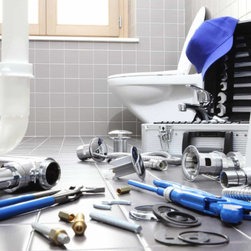


Taps, Toilets, and Tragedies: 5 Common Mistakes in DIY Plumbing (and How to Avoi
There is a distinct, sinking feeling that every homeowner in Wimbledon eventually experiences. It usually starts at 10:00 PM on a Sunday with a rhythmic drip, drip, drip from the bathroom mixer, or worse, the ominous sound of water gurgling up through the kitchen floorboards. In an era of online video tutorials, the temptation to grab a spanner and tackle the issue yourself is incredibly high. After all, how hard can it be to change a washer or install a new basin?
The reality, as any veteran plumber in South West London will tell you, is that plumbing is a precise trade. What begins as an innocent afternoon of DIY can quickly devolve into a domestic tragedy—complete with ruined ceilings, astronomical emergency call-out fees, and a frantic dash to find a stopcock.
At Precise Supplies, we have spent decades supplying both seasoned trade professionals and brave homeowners across Wimbledon with high-quality plumbing spares. We have seen the aftermath of well-meaning DIY projects gone wrong. To save your home, your carpet, and your sanity, we have compiled the five most common DIY plumbing mistakes and how you can avoid them.
1. Misjudging the Brutal Impact of London Hard Water
One of the most frequent errors DIY enthusiasts make in Southwest London is treating a plumbing installation like it exists in a textbook vacuum. They fail to account for local environmental factors, specifically, London's notoriously hard water.
Wimbledon and the wider SW19 area sit directly over a chalk aquifer, meaning our mains water supply is packed with calcium and magnesium carbonate. While harmless to drink, this hard water is a silent killer for domestic plumbing systems.
London Water Hardness Profile:
[Very Soft] ---- [Moderately Hard] ---- [Wimbledon Profile: Very Hard (>300ppm)]
Technical Specifications
When scale forms inside a pipe or appliance, it restricts flow diameter and acts as an insulative barrier. For instance, just 1.6mm of limescale build-up on a boiler's heating element can reduce its thermal efficiency by up to 12%.
Installation Best Practices
- Specify the Right Materials:When replacing components, opt for scale-resistant ceramic disc cartridges rather than traditional rubber washers in your Taps and Mixers. Ceramic discs handle the abrasive nature of limescale far better over time.
- Integrate Inline Protection:If you are modifying your system or installing a new appliance, always budget for an inline scale inhibitor or a water softener. It protects your downstream pipework and keeps your water-heating elements running efficiently.
2. Over-Tightening Fittings (The "More is Better" Fallacy)
It is a natural human instinct: if a joint is designed to hold water, tightening it as hard as physically possible must make it safer, right? Incorrect. Over-tightening is arguably the quickest way to crack a nut, split a rubber seal, or strip a thread.
Plumber's Checklist: The Golden Rules of Threaded Joints
- [ ] Hand-Tight First:Always spin nuts and couplings onto threads by hand to ensure they aren't cross-threading.
- [ ] The Quarter-Turn Rule:Once a compression fitting is finger-tight, use a spanner to turn it an additional three-quarters to one full turn. No more.
- [ ] Inspect the Washer:If a joint relies on a rubber or silicone washer, it requires very little mechanical pressure to seal. Crushing the washer destroys its structural integrity.
Pro-Tip: If you are working on modern plastic push-fit plumbing or speed-fit connections, ensure you use the correct pipe inserts (super-sleeves). Failing to insert these support liners into plastic Piping and Fittings will cause the pipe to deform under pressure, leading to catastrophic joint failure.
3. Mixing Incompatible Metals in Pipework
When extending a central heating loop or tapping into an existing supply line to feed a new radiator, DIYers often grab whatever materials are cheapest or closest to hand at the bottom of their toolbox. Mixing copper and galvanized steel pipes without the proper barrier is a recipe for disaster.
Galvanic Corrosion Process:
[Copper Pipe (Noble)] <=== Electron Flow ===> [Steel/Iron Pipe (Anode)] = Rapid Rusting
Technical Specifications
When two dissimilar metals come into direct contact in the presence of an electrolyte (water), a chemical process called galvanic corrosion occurs. Copper is a highly noble metal, whereas steel and iron are less noble. The copper will actively accelerate the corrosion of the steel, leading to localized rusting, pinhole leaks, and system blockages within months.
Installation Best Practices
- Maintain Material Consistency:Try to keep your system uniform. If your home has existing copper pipework, stick with copper or transition safely to modern barrier PEX plastics using approved push-fit adaptors.
- Use Dielectric Unions:If you absolutely must connect copper to galvanized steel, you must install a dielectric union, , a special fitting that uses a non-conductive plastic spacer to physically isolate the two metals from one another.
4. Neglecting to Map and Test the Mains Stopcock
Before you undo a single thread on a kitchen tap or attempt to replace a flush valve in a toilet cistern, you must isolate the water supply. It sounds incredibly obvious, but a shocking number of DIY tragedies occur because homeowners assume their local isolation valves (service valves) work perfectly, only to find them seized fast by limescale.
If a service valve fails while a tap is disconnected, you have seconds to turn off the water at the mains before your house floods.
Plumber's Checklist: Isolation Protocol
- [ ] Locate your internal mains stopcock (usually under the kitchen sink, in a utility space, or under the stairs).
- [ ] Test the valve by turning it clockwise. If it is stiff, do not force it with a hammer; apply a penetrating oil and gently work it back and forth.
- [ ] Turn on a downstairs tap to verify that the water flow completely stops when the stopcock is closed.
- [ ] Keep the Precise Supplies team on speed-dial if you need to replace an old, seized brass stopcock with a modern, reliable quarter-turn lever valve.
5. Underestimating Central Heating Spares and Boiler Logic
With energy prices remaining a critical concern for households across London, many homeowners try to service their own heating systems or replace parts of their combi boilers to save on labour costs. This is not just a common mistake; it can be incredibly dangerous and, in many cases, illegal.
Technical Specifications
Under UK law, anyone working on gas appliances must be on the Gas Safe Register. While you are legally allowed to bleed a radiator or top up your system's filling loop pressure, you must never break the combustion seal of a boiler or attempt to replace internal gas valves, fans, or heat exchangers yourself.
Central Heating System Boundaries:
[Safe DIY Zone: Radiator Bleeding / Pressure Balancing]
====================== LEGAL & SAFETY LINE ======================
[Gas Safe Only: Combustion Chambers / Gas Valves / Internal Spares]
Installation Best Practices
- Know Your Limits:If your central heating system is short-cycling or throwing up error codes, check the system pressure first. If it requires internal components, buy the correct boiler spares from an approved merchant, but leave the installation to a certified Gas Safe engineer.
- Use High-Quality System Inhibitor:Whenever you drain a radiator to replace a valve, always reintroduce a high-quality chemical inhibitor (like Fernox or Sentinel) to the central heating circuit. This prevents internal black iron oxide sludge from building up and destroying your boiler's circulation pump.
Get the Right Gear for the Job
Plumbing errors are expensive, but they are entirely preventable if you use the correct tools, high-grade components, and a little professional insight. Don't risk turning a simple weekend upgrade into an emergency call-out.
Whether you are looking for specific Boiler Spares, a sleek upgrade for your Taps and Mixers, or simply need the exact brass compression fitting to secure your Piping and Fittings, we have you covered.
Visit the Precise Supplies trade counter in Wimbledon today. Speak directly with our team for trade-standard technical guidance, extensive local stock, and the genuine plumbing advice you need to get the job done right first time.