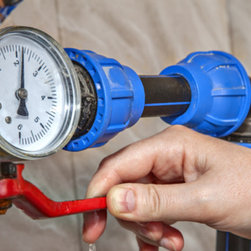


Why Your New Tap Might Not Work
Why Your New Tap Might Not Work: The Importance of Checking Water Pressure First in SW19
There is nothing quite as frustrating as finally choosing the perfect centre-piece for your kitchen or bathroom renovation, only to find that once it’s installed, the water flow is a mere trickle. For many residents across Wimbledon and the surrounding South West London areas, this is a common plumbing headache that often leads to a "call-out" that could have been avoided with a bit of prior technical knowledge.
At Precise Supplies, we see it all the time: a stunning high-pressure mixer tap fitted onto a gravity-fed system that simply doesn't have the "oomph" to push the water through. Before you break out the spanners or call in the local SW19 trade, you need to understand the relationship between your plumbing fixtures and your home’s water pressure.
The Core Issue: High-Pressure Taps vs. Low-Pressure Systems
The most common reason a new tap "doesn't work" isn't a manufacturing defect; it’s a mismatch in specifications. Many modern, luxury taps and mixers are designed for high-pressure systems. If your home relies on an older gravity-fed setup common in the period properties of Wimbledon your water pressure might be as low as 0.2 bar.
If you install a tap that requires a minimum of 1.0 or 1.5 bar to operate, the internal valves (especially ceramic discs) will restrict the flow so much that your "waterfall" tap becomes a disappointing dribble.
Technical Specifications: Understanding "Bar" Pressure
In the plumbing trade, we measure water pressure in "bars." One bar is roughly equivalent to the atmospheric pressure at sea level, or the force required to push water up to a height of 10 metres.
Plumber’s Checklist: Pre-Purchase Pressure Test
Before you buy, perform these quick checks:
Installation Best Practices: Getting it Right the First Time
When you are ready to install, it isn't just about the tap itself. You must ensure the entire "water path" is optimized. This is where Piping and Fittings play a crucial role. Using a 15mm pipe where a 22mm flow is required can choke the pressure before it even reaches the spindle.
Pro-Tips for a Flawless Install:
The London Factor: Hard Water and Limescale
Properties in Wimbledon deal with some of the hardest water in the UK. Over time, calcium and magnesium deposits build up inside your boiler spares and pipework.
This limescale doesn't just affect the taste of your tea; it narrows the internal diameter of your pipes and clogs the filters inside modern mixers. If your pressure has dropped gradually over time, it’s likely a scale issue rather than a mechanical failure of the tap. We highly recommend installing a scale inhibitor at the point of entry to protect your new investment.
Solving the Pressure Problem: Pumps and Accumulators
If you have fallen in love with a high-pressure tap but have a low-pressure home, you aren't completely out of luck. There are several ways to boost your system:
1. Negative or Positive Head Pumps
A pump can be installed near your hot water cylinder to mechanically boost the flow to your bathroom or kitchen. This allows you to use any tap or shower head you desire.
2. Mains Pressure Conversion
The gold standard is upgrading to an unvented system. This involves removing your loft tanks and installing a cylinder that takes water directly from the mains. This provides high-pressure hot and cold water to every outlet in the house.
Summary Checklist for Homeowners and Trades
Visit Precise Supplies in Wimbledon for Expert Advice
Choosing the right plumbing components shouldn't be a guessing game. At Precise Supplies, we have been serving the Wimbledon trade and DIY community for years, providing the technical expertise you won't find in a big-box retail store.
Whether you need high-spec taps and mixers, replacement boiler spares to get your pressure back up, or the right piping and fittings to complete a complex install, our team is here to help.
Don't let your renovation end in a trickle. Visit our trade counter in southwest London today for professional-grade supplies and "straight-shooting" advice that ensures your plumbing works perfectly from the first turn of the tap.
There is nothing quite as frustrating as finally choosing the perfect centre-piece for your kitchen or bathroom renovation, only to find that once it’s installed, the water flow is a mere trickle. For many residents across Wimbledon and the surrounding South West London areas, this is a common plumbing headache that often leads to a "call-out" that could have been avoided with a bit of prior technical knowledge.
At Precise Supplies, we see it all the time: a stunning high-pressure mixer tap fitted onto a gravity-fed system that simply doesn't have the "oomph" to push the water through. Before you break out the spanners or call in the local SW19 trade, you need to understand the relationship between your plumbing fixtures and your home’s water pressure.
The Core Issue: High-Pressure Taps vs. Low-Pressure Systems
The most common reason a new tap "doesn't work" isn't a manufacturing defect; it’s a mismatch in specifications. Many modern, luxury taps and mixers are designed for high-pressure systems. If your home relies on an older gravity-fed setup common in the period properties of Wimbledon your water pressure might be as low as 0.2 bar.
If you install a tap that requires a minimum of 1.0 or 1.5 bar to operate, the internal valves (especially ceramic discs) will restrict the flow so much that your "waterfall" tap becomes a disappointing dribble.
Technical Specifications: Understanding "Bar" Pressure
In the plumbing trade, we measure water pressure in "bars." One bar is roughly equivalent to the atmospheric pressure at sea level, or the force required to push water up to a height of 10 metres.
- Low Pressure (0.1 - 0.5 Bar):Typically found in homes with a cold water tank in the loft and a hot water cylinder in an airing cupboard (gravity-fed).
- High Pressure (1.0 - 3.0+ Bar):Common in homes with unvented cylinders (like Megaflo) or modern combination boilers.
Plumber’s Checklist: Pre-Purchase Pressure Test
Before you buy, perform these quick checks:
- Identify your boiler:If you have a combi-boiler, you likely have high pressure.
- Check the tank:If you have a tank in the loft, you are likely on a low-pressure system.
- The "One Metre" Rule:For every metre of "head" (the vertical distance between the bottom of your water tank and the tap), you get 0.1 bar of pressure. If your tank is only two metres above your bathroom, you only have 0.2 bar.
Installation Best Practices: Getting it Right the First Time
When you are ready to install, it isn't just about the tap itself. You must ensure the entire "water path" is optimized. This is where Piping and Fittings play a crucial role. Using a 15mm pipe where a 22mm flow is required can choke the pressure before it even reaches the spindle.
Pro-Tips for a Flawless Install:
- Clear the Debris:London is notorious for hard water. Before connecting your new tap, flush the pipes to ensure no limescale or solder flux clogs the delicate aerators.
- Check the Flexi-Hoses:Ensure the flexible connectors aren't kinked. A small twist can reduce water flow by 50%.
- Isolation Valves:Always install full-bore isolation valves. Standard valves have a narrower internal diameter which can further restrict low-pressure systems.
The London Factor: Hard Water and Limescale
Properties in Wimbledon deal with some of the hardest water in the UK. Over time, calcium and magnesium deposits build up inside your boiler spares and pipework.
This limescale doesn't just affect the taste of your tea; it narrows the internal diameter of your pipes and clogs the filters inside modern mixers. If your pressure has dropped gradually over time, it’s likely a scale issue rather than a mechanical failure of the tap. We highly recommend installing a scale inhibitor at the point of entry to protect your new investment.
Solving the Pressure Problem: Pumps and Accumulators
If you have fallen in love with a high-pressure tap but have a low-pressure home, you aren't completely out of luck. There are several ways to boost your system:
1. Negative or Positive Head Pumps
A pump can be installed near your hot water cylinder to mechanically boost the flow to your bathroom or kitchen. This allows you to use any tap or shower head you desire.
2. Mains Pressure Conversion
The gold standard is upgrading to an unvented system. This involves removing your loft tanks and installing a cylinder that takes water directly from the mains. This provides high-pressure hot and cold water to every outlet in the house.
Summary Checklist for Homeowners and Trades
- Know your Bar:Match the tap’s minimum required pressure to your home’s actual pressure.
- Check the Pipework:Ensure your Piping and Fittings are the correct size and free of scale.
- Account for Scale:In SW19, hard water is your biggest enemy. Use filters and inhibitors where possible.
- Consult an Expert:If in doubt, ask a veteran plumber to perform a pressure gauge test at the sink.
Visit Precise Supplies in Wimbledon for Expert Advice
Choosing the right plumbing components shouldn't be a guessing game. At Precise Supplies, we have been serving the Wimbledon trade and DIY community for years, providing the technical expertise you won't find in a big-box retail store.
Whether you need high-spec taps and mixers, replacement boiler spares to get your pressure back up, or the right piping and fittings to complete a complex install, our team is here to help.
Don't let your renovation end in a trickle. Visit our trade counter in southwest London today for professional-grade supplies and "straight-shooting" advice that ensures your plumbing works perfectly from the first turn of the tap.