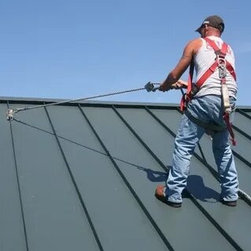


How Integrated Roof Safety Solutions Protect Your Workforce at Heights
Ensuring the safety of your team while they work at elevated levels is a vital responsibility that requires a comprehensive approach. Managing individual safety components leads to gaps in your protection strategy, which is why integrated systems have become the preferred choice. This article explains how combining safety elements into a single framework provides superior protection for your workforce.
Strengthening the Core of Your Height Safety Strategy
An integrated approach to safety means that every component is designed to work in perfect harmony with the others. When systems are engineered together, there is a significantly lower risk of equipment incompatibility, which is a common cause of accidents on complex worksites. This holistic design ensures that the forces generated during a fall are distributed correctly across the entire structure.
Streamlining Compliance with Industry Safety Standards
Integrated solutions make it easier for you to remain compliant with current regulations. These systems are tested as a whole unit, meaning you receive documentation that proves the entire setup meets or exceeds the necessary safety benchmarks. Having a single point of reference for your safety audits saves a considerable amount of time and reduces the administrative burden on your site managers.
Enhancing Worker Confidence and On-Site Productivity
When your employees see that you have invested in an integrated safety system, it sends a message that you value their health and security. A confident workforce is a more productive one, as team members are less likely to hesitate when moving around challenging areas. By removing the mental stress of potential falls, you allow your team to dedicate their full attention to the quality of their craftsmanship.
Simplifying the Maintenance and Inspection Process
A unified system simplifies your ongoing maintenance schedule significantly. You will benefit from having a consistent set of inspection criteria for the entire installation, which makes it much easier for your safety officers to identify wear and tear. Most providers offer service packages, ensuring that every part of your safety infrastructure is checked and certified at the same time by a qualified professional.
Adapting to Diverse Architectural Challenges and Layouts
Every building presents obstacles, yet roof safety solutions are remarkably flexible. You can work with designers to create a layout that provides continuous attachment points, allowing workers to move across large areas without having to disconnect their safety lines. This transition is vital for maintaining constant protection, especially on roofs with multiple levels or fragile sections that must be avoided.
Reducing Long-Term Costs Through Durable Engineering
While the initial investment in an integrated system seems significant, the savings in terms of durability and reduced liability are substantial for any business. These systems are built from premium materials designed to withstand harsh weather conditions. Investing in quality from the start is a financially savvy move that protects your budget just as much as it protects your hardworking staff members.
Improving Emergency Response and Rescue Readiness
A safety system provides a much more predictable and stable platform for carrying out a swift and effective rescue. You will find that these systems include designated points that are engineered to support the weight of both a fallen worker and a rescuer. Because the layout is logical, emergency services or internal rescue teams can navigate the site more quickly to reach the person in need.
A Unified Approach to Heights Protection
These systems offer a level of security that individual components simply cannot match on their own. You have seen how a holistic strategy simplifies everything from daily operations and worker confidence to emergency preparedness. Now is the ideal time to review your current safety measures and consider how a solution could provide a safer and more successful future for your business and your team.
Strengthening the Core of Your Height Safety Strategy
An integrated approach to safety means that every component is designed to work in perfect harmony with the others. When systems are engineered together, there is a significantly lower risk of equipment incompatibility, which is a common cause of accidents on complex worksites. This holistic design ensures that the forces generated during a fall are distributed correctly across the entire structure.
Streamlining Compliance with Industry Safety Standards
Integrated solutions make it easier for you to remain compliant with current regulations. These systems are tested as a whole unit, meaning you receive documentation that proves the entire setup meets or exceeds the necessary safety benchmarks. Having a single point of reference for your safety audits saves a considerable amount of time and reduces the administrative burden on your site managers.
Enhancing Worker Confidence and On-Site Productivity
When your employees see that you have invested in an integrated safety system, it sends a message that you value their health and security. A confident workforce is a more productive one, as team members are less likely to hesitate when moving around challenging areas. By removing the mental stress of potential falls, you allow your team to dedicate their full attention to the quality of their craftsmanship.
Simplifying the Maintenance and Inspection Process
A unified system simplifies your ongoing maintenance schedule significantly. You will benefit from having a consistent set of inspection criteria for the entire installation, which makes it much easier for your safety officers to identify wear and tear. Most providers offer service packages, ensuring that every part of your safety infrastructure is checked and certified at the same time by a qualified professional.
Adapting to Diverse Architectural Challenges and Layouts
Every building presents obstacles, yet roof safety solutions are remarkably flexible. You can work with designers to create a layout that provides continuous attachment points, allowing workers to move across large areas without having to disconnect their safety lines. This transition is vital for maintaining constant protection, especially on roofs with multiple levels or fragile sections that must be avoided.
Reducing Long-Term Costs Through Durable Engineering
While the initial investment in an integrated system seems significant, the savings in terms of durability and reduced liability are substantial for any business. These systems are built from premium materials designed to withstand harsh weather conditions. Investing in quality from the start is a financially savvy move that protects your budget just as much as it protects your hardworking staff members.
Improving Emergency Response and Rescue Readiness
A safety system provides a much more predictable and stable platform for carrying out a swift and effective rescue. You will find that these systems include designated points that are engineered to support the weight of both a fallen worker and a rescuer. Because the layout is logical, emergency services or internal rescue teams can navigate the site more quickly to reach the person in need.
A Unified Approach to Heights Protection
These systems offer a level of security that individual components simply cannot match on their own. You have seen how a holistic strategy simplifies everything from daily operations and worker confidence to emergency preparedness. Now is the ideal time to review your current safety measures and consider how a solution could provide a safer and more successful future for your business and your team.