

Engineered Oak Plank in Central Cambridge Georgian Home
Engineered Oak Plank in Central Cambridge Georgian Home
Period features and a well fixed skirting, required a little touch of magic!
This Oak Plank installation in a Georgian Home case study explains just how we can get around some of those little ‘problems’ to install a perfect floor.
The project:
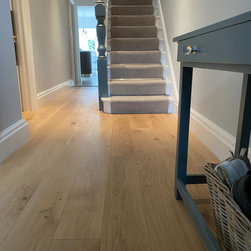
Our customers invited us to their beautiful Georgian Period home to fit an engineered Oak Plank that they had chosen in our showroom.
This wide plank has a neutral coloured raw Oak Finish. This colour and style of wood is extremely versatile and will suit any property.
Simple and effective Oak Plank
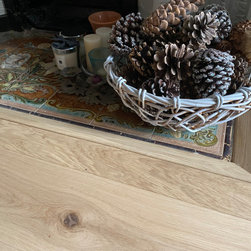
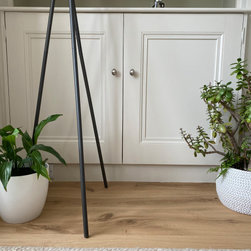
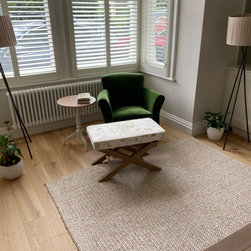
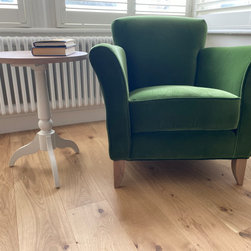
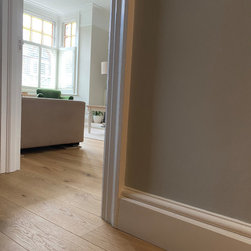
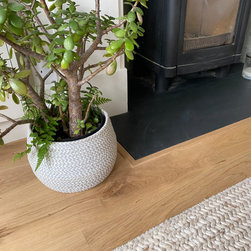
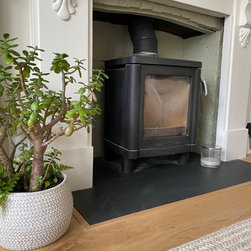
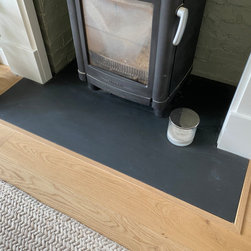
It certainly works well in this Georgian Property as you can see from the photos. It is simple and effective, and doesn’t detract from the beautiful period features.
The installation:
While there was no real difficulty with this installation, we did have to work a little bit of magic around the skirtings.
Skirtings hide gaps and mess
Skirtings are something you often don’t notice until they aren’t there. Yet they are critical for hiding messy plastering and the expansion gaps you need to leave where wood floors meet walls.
What was the challenge here?
When fitting flooring you need to remove and then reattach skirting after the floor is laid to cover the expansion gap between the new floor and the wall.
Let’s not skirt around the issue
The problem we typically find in Georgian and Victorian houses is that there is very often large period style skirting extremely well attached to the wall.
By removing these large and well fitted skirting boards you would probably damage the walls.
This is exactly what we wanted to avoid in our customer’s Georgian property.
Cue Skirting board Magic:
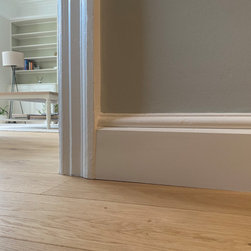
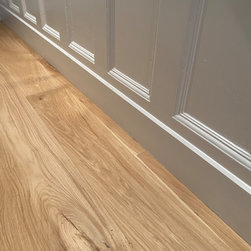
So, to work around this, we left the period skirting in place and laid the Engineered floor up to it.
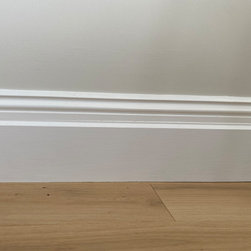
We then hid the expansion gap with an extra piece of skirting which when decorated blends in with the original.
This is a perfect way of hiding expansion gaps without removing old or period skirting boards and damaging walls.
Have a look at the photos, you’d never know!
So if you are worried that this may be an issue for you if you own a period home, rest assured there will be a way around it, and it might not even need a magic wand!
Period features and a well fixed skirting, required a little touch of magic!
This Oak Plank installation in a Georgian Home case study explains just how we can get around some of those little ‘problems’ to install a perfect floor.
The project:
Our customers invited us to their beautiful Georgian Period home to fit an engineered Oak Plank that they had chosen in our showroom.
This wide plank has a neutral coloured raw Oak Finish. This colour and style of wood is extremely versatile and will suit any property.
Simple and effective Oak Plank
It certainly works well in this Georgian Property as you can see from the photos. It is simple and effective, and doesn’t detract from the beautiful period features.
The installation:
While there was no real difficulty with this installation, we did have to work a little bit of magic around the skirtings.
Skirtings hide gaps and mess
Skirtings are something you often don’t notice until they aren’t there. Yet they are critical for hiding messy plastering and the expansion gaps you need to leave where wood floors meet walls.
What was the challenge here?
When fitting flooring you need to remove and then reattach skirting after the floor is laid to cover the expansion gap between the new floor and the wall.
Let’s not skirt around the issue
The problem we typically find in Georgian and Victorian houses is that there is very often large period style skirting extremely well attached to the wall.
By removing these large and well fitted skirting boards you would probably damage the walls.
This is exactly what we wanted to avoid in our customer’s Georgian property.
Cue Skirting board Magic:
So, to work around this, we left the period skirting in place and laid the Engineered floor up to it.
We then hid the expansion gap with an extra piece of skirting which when decorated blends in with the original.
This is a perfect way of hiding expansion gaps without removing old or period skirting boards and damaging walls.
Have a look at the photos, you’d never know!
So if you are worried that this may be an issue for you if you own a period home, rest assured there will be a way around it, and it might not even need a magic wand!